
Introduction
In-House Counsel vs VCLO – this is the decision that quietly determines whether a growing business builds a legal function that scales, or one that bleeds budget from day one.
Here’s the reality most founders discover too late: your legal needs are not static. From incorporation to funding rounds, from customer contracts to regulatory compliance, the legal complexity of a scaling business evolves faster than most teams anticipate. And yet, the instinctive response – “we’ll just hire someone in-house” – often creates more cost and rigidity than it solves.
There is a smarter way. And it starts with understanding exactly what you’re comparing.
In-House Legal vs VCLO: Key Differences, Costs, and What Actually Scales
The Hidden Cost of Hiring In-House Too Early
Bringing a full-time General Counsel or in-house legal professional on board feels like a mark of maturity. It signals that your business has arrived. But the numbers behind that hire rarely feel as good as the sentiment.
According to compensation data from The L Suite, the median base salary for a General Counsel or CLO at a high-growth private company is $310,000 per year in the US – and that is before bonuses, equity, benefits, and employer overheads. In the Indian context, a qualified in-house legal head at a mid-stage startup easily demands ₹30–60 lakh annually, with senior hires going significantly higher.
Beyond the salary, there are compounding costs that founders rarely factor in:
- Recruitment costs — legal headhunting fees, interview cycles, and time-to-hire
- Onboarding time — a new hire takes 3–6 months to become fully effective
- Fixed overhead — salary continues whether your legal workload is heavy or light
- Specialisation gaps — a single in-house lawyer rarely covers all the areas your business actually needs (contracts, IP, employment, regulatory, M&A)
The result? You pay full-time costs for part-time utility.
What Is a Virtual CLO (VCLO)?
A Virtual Chief Legal Officer (VCLO) – sometimes called a fractional CLO – is a senior legal professional or a dedicated legal team that serves as your embedded legal function, without being on your permanent payroll.
As modern virtual counsel models demonstrate, the VCLO approach gives businesses access to a skilled legal team without bearing the cost of a full-time hire. Engagements are typically structured as monthly retainers or flexible service packages, covering everything from contract drafting and compliance to board advisory and regulatory guidance.
Think of it as your legal department as a service, senior expertise, on tap, at a fraction of the cost.
Side-by-Side: In-House Counsel vs VCLO
| Factor
|
In-House Counsel
|
Virtual CLO (VCLO)
|
|---|---|---|
| Annual Cost
|
₹30–60L+ (India) | ₹5–20L (retainer-based) |
| Expertise Range
|
Single generalist | Multi-specialist team |
| Scalability
|
Fixed headcount | Scales with your needs |
| Speed to Deploy
|
3–6 months (hire cycle) | Days to weeks |
| Risk During Low-Activity Phases
|
High (fixed cost) | Low (retainer flexibility) |
| Strategic Input
|
Depends on experience | Embedded, senior-level |
When In-House Makes Sense – And When It Doesn’t
In-house counsel is justified when:
- You have consistent, high-volume legal work (daily contract negotiations, litigation management)
- You’re at Series C or beyond, with a dedicated legal budget
- Your business operates in a highly regulated industry where a full-time compliance officer is mandated
A VCLO model makes more sense when:
- You’re a founder or SME owner managing multiple growth priorities simultaneously
- Legal needs are episodic – intense during fundraising or product launches, lighter otherwise
- You need multi-domain expertise without building an entire legal team
- You want legal counsel that behaves like a strategic business partner, not a cost centre
A 2025 survey by the Association of Corporate Counsel found that understaffing remains the single biggest barrier legal departments face, with many organisations struggling to balance legal complexity with fixed-headcount constraints. The VCLO model was built precisely to solve this structural problem.
Why Founders and SMEs Are Choosing the VCLO Model in 2025
Legal Is No Longer Just About Risk – It’s About Growth
According to a 2026 legal technology trends report by Brightflag, today’s legal leaders are expected to be strategic business partners, not just risk managers. More than a third of General Counsels plan to invest in virtual legal assistance, reflecting a broader shift toward embedded, tech-enabled legal support.
This is the In-House Counsel vs VCLO debate reframed: it is no longer a question of “who do we hire?” – it is a question of “what legal infrastructure do we build?”
For startups and SMEs, the answer increasingly points to the VCLO model, for three structural reasons:
- Capital efficiency — retain expert legal guidance without committing to fixed headcount costs
- Speed — a VCLO can be operational within days, not months
- Breadth — access to specialists across contract law, employment, IP, regulatory, and M&A within a single engagement
The Indian Context: A Growing, Complex Legal Landscape
India’s legal services market has touched USD 2.49 billion in 2025, projected to reach USD 3.37 billion by 2030. As the startup ecosystem matures – with Indian startups attracting over $13.7 billion in VC funding in 2024 alone – the regulatory and transactional legal burden on founders is intensifying.
DPIIT compliance, FEMA regulations for cross-border investments, GST and labour law complexities, investor term sheets, and data protection obligations under the DPDP Act – the legal surface area of a growing Indian business has never been larger.
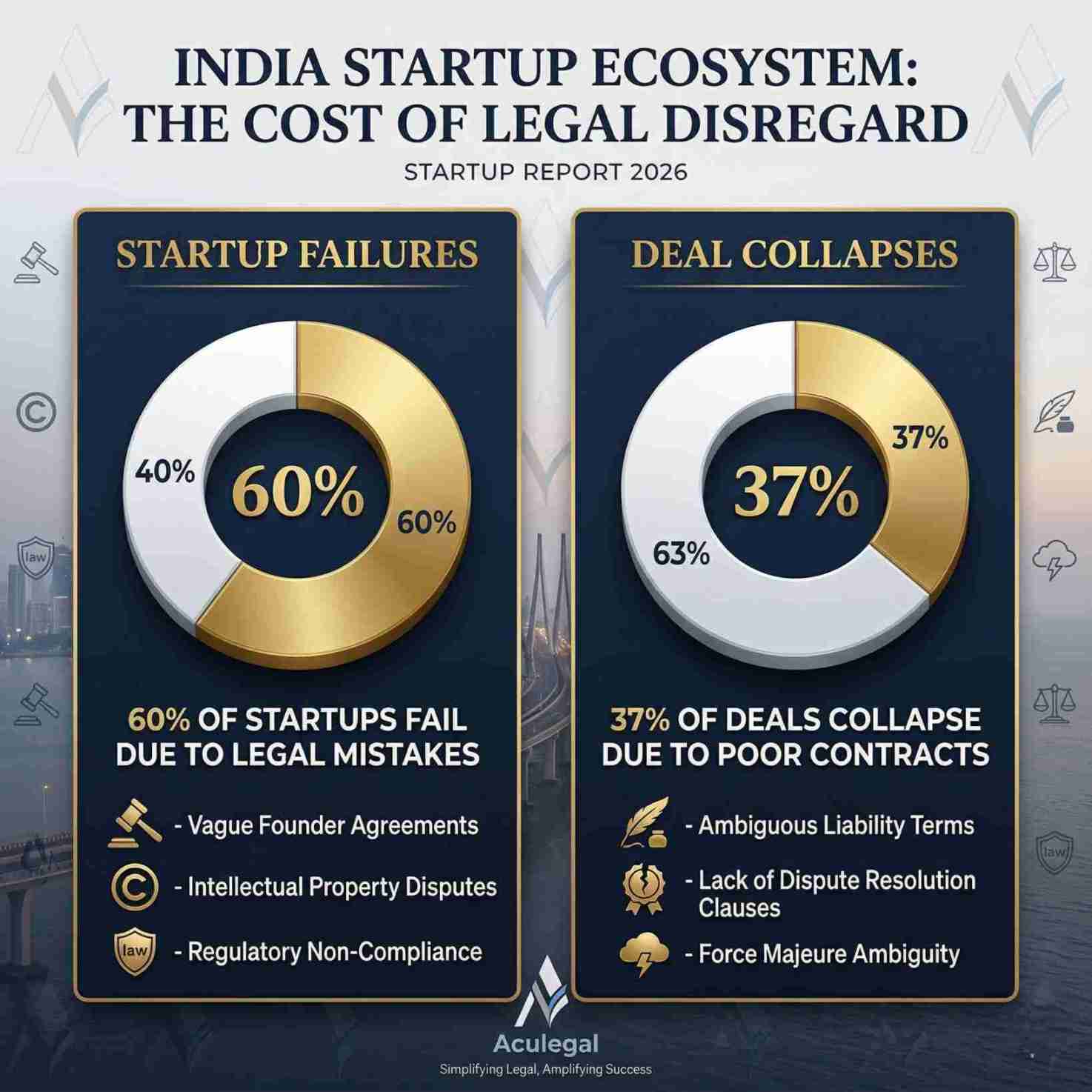
And yet, most early to mid-stage founders still rely on reactive legal support: calling a lawyer only when something has already gone wrong. That is not a legal strategy. That is a liability.
What a VCLO Actually Does (That Most Founders Don’t Realise)
A Virtual CLO is not just a contract reviewer on retainer. When structured correctly, a VCLO engagement provides:
- Proactive legal risk mapping — identifying issues before they become disputes
- Commercial contract strategy — not just drafting, but negotiating outcomes that serve your business
- Investor and fundraising support — term sheet review, due diligence readiness, cap table structuring
- Compliance infrastructure — building internal policies that scale with your team
- Board and leadership advisory — acting as a trusted strategic voice at the decision-making table
“Legal infrastructure is not a cost of doing business. It is infrastructure for growth.”
This is precisely the positioning that Aculegal brings to every client engagement. At Aculegal, we don’t just manage your legal risk, we architect your legal capability.
Three Signals That Tell You It’s Time to Switch to a VCLO Model
1. Your Ad-Hoc Legal Spend Is Becoming Unpredictable
If you’re engaging individual lawyers or law firms on a case-by-case basis, your legal spend is reactive, unpredictable, and almost certainly higher than it needs to be. A monthly retainer model gives you cost certainty and proactive coverage.
2. You’re Approaching a Funding Round, Acquisition, or Major Partnership
These are the moments where legal gaps become expensive. A VCLO embedded in your business can prepare you for due diligence, structure transactions protectively, and ensure you’re not leaving value on the table.
3. Your Internal Team Is Making Legal Decisions Without Legal Oversight
HR issuing non-compliant offer letters. Sales signing contracts with indemnity clauses they haven’t read. Founders agreeing to exclusivity terms in a WhatsApp message. This happens in growing businesses every day, and it creates the exact liabilities that a VCLO model is designed to prevent.
How Aculegal’s VCLO Model Is Built for Founders and SMEs
At Aculegal, we designed our Virtual CLO offering specifically for businesses that are scaling faster than their legal infrastructure. Our approach is built on three principles:
1. Embed, Don’t Just Advise
We become part of your team — attending leadership meetings, reviewing your commercial pipeline, and flagging risk before it materialises, not after.
2. Breadth Without the Overhead
Our model gives you access to specialists across corporate law, employment, IP, regulatory compliance, and transactional support — within a single, predictable engagement.
3. Strategy, Not Just Compliance
We think like business partners. Every legal decision we support is evaluated through the lens of your growth objectives, not just legal risk minimisation.
Simplifying Legal. Amplifying Success.
Internal Resources Worth Exploring
If you’re evaluating your legal infrastructure, these Aculegal service pages are a good starting point:
- Virtual CLO Services— Understand how our embedded legal model works and what’s included in a retainer engagement.
- Startup Legal Advisory — From incorporation to your first funding round, we’ve built a legal pathway designed for early-stage founders.
- Contract Review and Drafting — Commercial contracts that protect your business and accelerate your deals.
Conclusion: Build Legal Infrastructure That Moves With You
The In-House Counsel vs VCLO debate doesn’t have one universal answer, but for the vast majority of founders, startups, and SMEs, the math, the flexibility, and the strategic return all point in the same direction.
Full-time in-house counsel is a fixed asset. A Virtual CLO is scalable infrastructure.
Your business doesn’t need a lawyer who shows up every day. It needs senior legal expertise that shows up when it matters, and that is always thinking ahead of the next problem.
At Aculegal, that is exactly what we deliver.
Ready to Build Smarter Legal Infrastructure?
Book a free consultation with Aculegal today. In 30 minutes, we’ll assess your current legal exposure, identify the gaps in your legal infrastructure, and show you exactly how a VCLO engagement would work for your business.
Simplifying Legal. Amplifying Success.
Web Sources Referenced:
- The L Suite — General Counsel Salary and Compensation Trends 2025: https://www.lsuite.co/blog/tech-general-counsel-salary-trends
- Legal Dive — CLOs Increasing Outside Counsel Spend, ACC Survey 2025: https://www.legaldive.com/news/in-shift-clos-up-outside-counsel-spend-acc-survey-2025/738655/
- Brightflag — Top Legal Technology Trends 2026: https://brightflag.com/resources/legal-technology-trends/
- Startup Pedia — Virtual Advo, Monthly Subscription Legal Counsel for Startups & SMEs: https://startuppedia.in/startup-stories/gurugram-startup-offers-expert-lawyers-on-monthly-subscription-basis-to-startups-smes-businesses-9021481
- VirtualCounsel — Virtual Legal Counsel for Startups: https://www.atvirtualcounsel.com/



























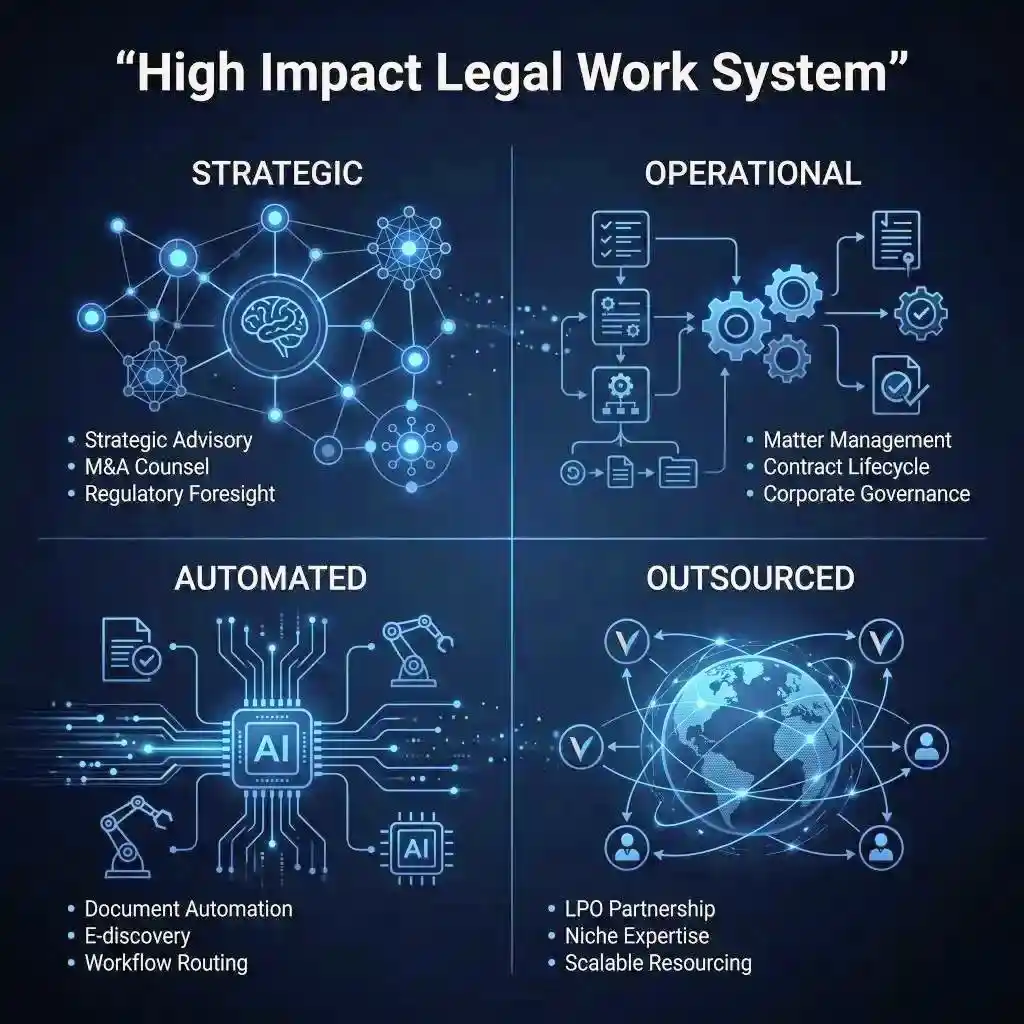



















 The proof: what the data says about India’s legal AI shift