
The Day a Signature Changed Everything
It started with a handshake and a promise.
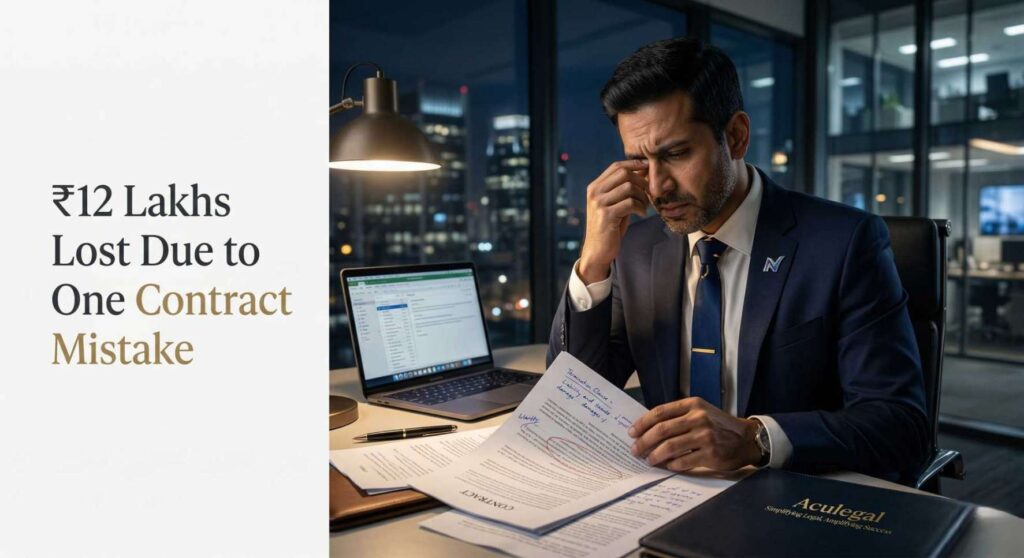
Rajan Mehta, a small business owner from Pune, was thrilled when a large vendor agreed to supply raw materials exclusively to his manufacturing unit for two years. The deal seemed solid. Both parties were excited. And somewhere in the rush to get started, Rajan signed a contract he barely read.
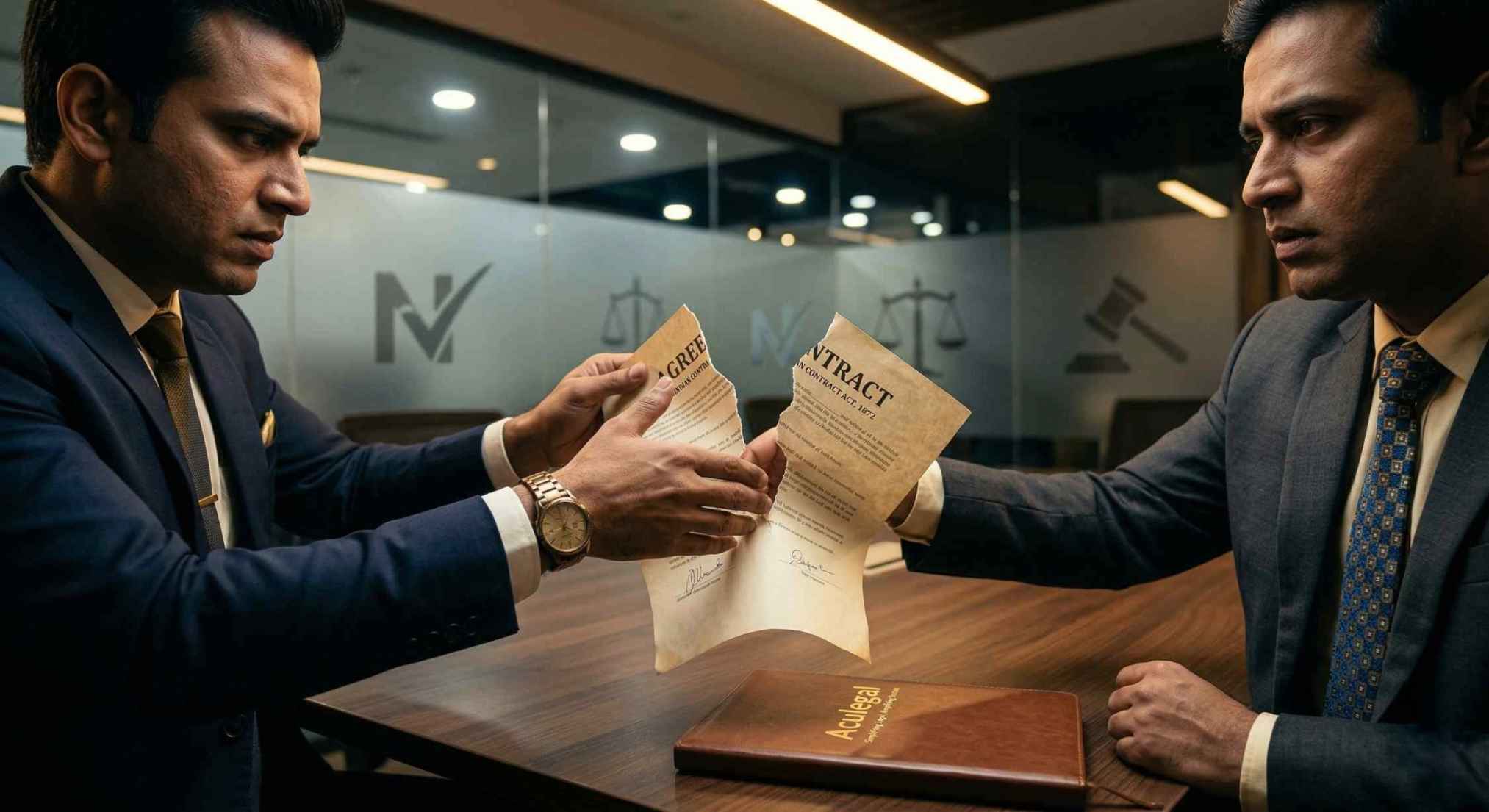
Six months later, the vendor walked away. No penalty. No recourse. Why? Because the agreement had no termination clause, no liquidated damages provision, and no jurisdiction defined. Rajan lost over ₹12 lakhs in sunk costs, operational downtime, and legal fees trying to recover what was never properly protected.
His story is not unique. In India, this happens every single day.
The Hidden Epidemic of Bad Contracts in India
Most Indian entrepreneurs treat contracts as a formality, something to sign and file away. But the numbers tell a very different story.
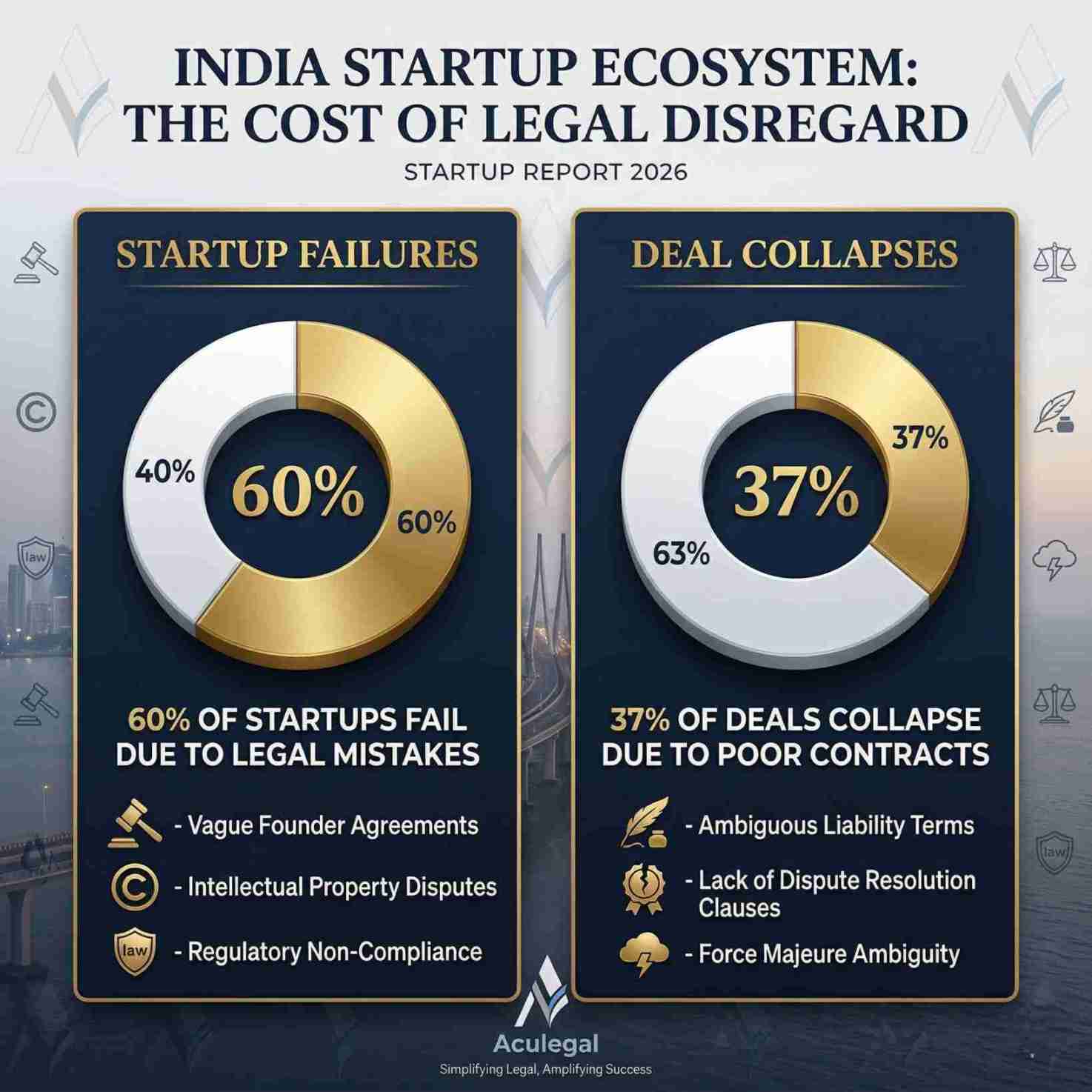
A 2024 report found that over 60% of Indian startups failed due to preventable legal missteps, and another study noted that 37% of deals fell through because of vague or missing agreements. Eve Consultancy
This is not just a startup problem. It affects freelancers, MSMEs, real estate buyers, vendors, and even large corporations. A contract that lacks key protections is not just a piece of paper; it is a financial time bomb.
India’s commercial contracting landscape is in a phase of accelerated evolution, with businesses navigating complex new legislative frameworks alongside significant judicial developments in dispute resolution. Chambers and Partners: The rules are changing. If your contracts are not changing with them, you are already behind.
Why Most Indians Don’t Protect Themselves Legally
Understanding the problem requires honesty about why it exists.
1. “We Trust Each Other” Culture
In India, business relationships are built on trust and personal bonds. Many deals are sealed over chai, not contracts. This is a strength culturally, but a serious legal vulnerability commercially.
Trust does not hold up in court. A well-drafted contract does.
2. Contracts Feel Complicated and Expensive
Many small business owners avoid lawyers because they assume legal help is either too complex or too costly. So they use templates from the internet, WhatsApp forwards, or old agreements recycled from previous deals.
The result? Clauses that don’t apply to their situation, missing protections they didn’t know they needed, and terms that actually work against them.
3. Nobody Expects Things to Go Wrong
When business relationships are good, a contract feels unnecessary. But the purpose of a contract is not to plan for success; it is to protect you when things go wrong. And things go wrong more often than anyone expects.

What Makes a Contract Dangerous in India?
Not all bad contracts are immediately apparent as such. Many look professional but are missing the protections that matter most. Here are the most common red flags:
- No clear payment terms — When is payment due? What happens if it is late? Vague language here leads to months of chasing invoices.
- Missing termination clauses — Can either party walk away? Under what conditions? With how much notice?
- No dispute resolution mechanism — If things go wrong, how is it resolved? Arbitration, mediation, or court? Which court? Which city?
- Undefined force majeure — What happens during a pandemic, flood, or government shutdown? This matters more than most people realize.
- No intellectual property assignment — Who owns the work product? The design? The code? The brand elements?
- Vague scope of work — “Providing services as needed” is not a scope. It is an invitation for conflict.
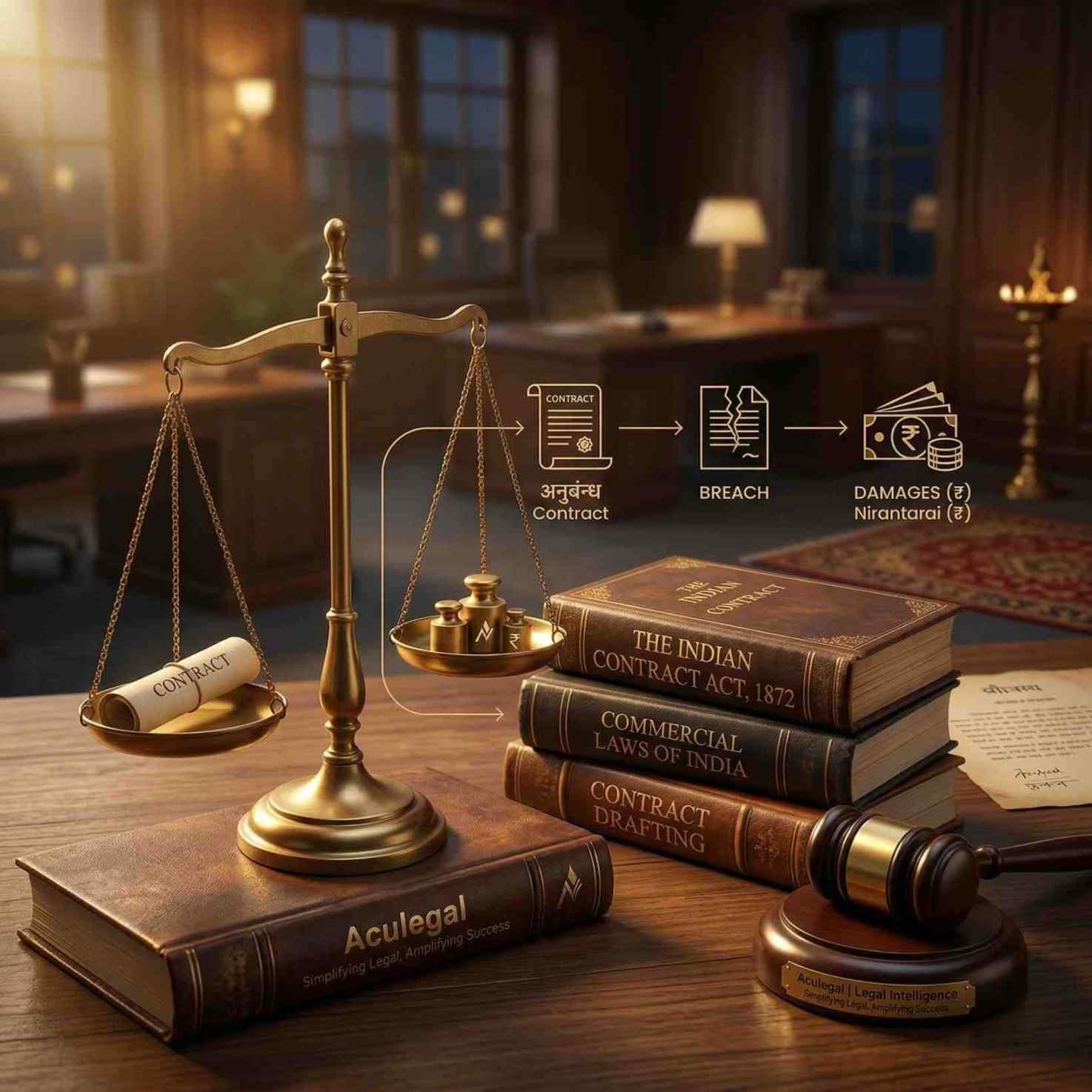
When faced with a breach of contract in India, the non-breaching party has several legal remedies available, including seeking damages, obtaining specific performance through a court order, or securing injunctions to prevent further violations. Maheshwari & Co. But these remedies are only accessible if the contract was drafted properly in the first place.

What the Indian Contract Act, 1872 Says, and Why It Matters to You
India’s legal framework for contracts is well-established, but it requires you to do your part.
Section 74 of the Indian Contract Act, 1872 provides that if a sum is named in the contract as the amount to be paid in case of breach, the party complaining of breach is entitled to receive that amount. Iclg This is called a liquidated damages clause, and without it, proving your loss in court becomes significantly harder.
The law also establishes that:
- A contract must have a lawful consideration and free consent to be enforceable.
- Electronically signed contracts are now legally valid in India, following judicial decisions that confirmed the enforceability of digital execution.
- The legal validity and enforceability of electronically signed contracts, via DocuSign, Aadhaar eSign, and similar platforms, is now firmly established, supported by judicial decisions. Chambers and Partners
Knowing the law helps. But applying it to your specific situation is where a qualified legal professional becomes essential.
The Aculegal Approach: Legal Protection That Works for Real Indian Businesses
At Aculegal, we believe that legal protection should not be a privilege reserved for large corporations with in-house counsel. Every individual, freelancer, startup, and MSME deserves contracts that actually protect them.
Here’s What We Help You Do:
- Contract Drafting from Scratch We create clear, enforceable agreements tailored to your specific business, industry, and risk profile. No recycled templates. No confusing jargon.
- Contract Review Before You Sign Before you put your signature on any agreement, let our experts review it. We identify risky clauses, missing protections, and terms that could cost you later.
- Breach of Contract Guidance If an agreement has already been violated, we assess your legal standing and advise you on the most effective path forward, whether that means a legal notice, negotiation, arbitration, or litigation.
- Business-Specific Legal Packages From vendor agreements and employment contracts to partnership deeds and client service agreements, we cover the full spectrum of business legal needs at transparent, affordable pricing.
Real Proof: When Good Contracts Change Outcomes
Consider two businesses in the same industry. Both had a vendor fail to deliver goods on time, causing significant operational disruption.
Business A had a contract with:
- Clear delivery timelines
- A liquidated damages clause at ₹50,000 per day of delay
- Arbitration clause with seat in Mumbai
Result: Business A recovered ₹3.5 lakhs in damages through arbitration within four months.
Business B had a one-page agreement with no penalty clause and no dispute resolution mechanism.
Result: Business B spent 18 months and over ₹2 lakhs on legal fees — and recovered nothing.
The difference was not the vendor. It was the contract.

5 Things You Must Do Before Signing Any Contract in India
Whether you are signing a vendor agreement, a lease, a service contract, or a partnership deed – follow these five steps:
- Never sign without reading – Read every clause, every schedule, every annexure. If you don’t understand something, ask.
- Get it reviewed by a qualified lawyer – Not a friend who “knows about legal stuff.” A qualified legal professional who understands Indian contract law.
- Define everything in writing – Scope, payment, timelines, deliverables, consequences of non-performance. Nothing should be assumed.
- Include a dispute resolution clause – Specify whether disputes go to arbitration or court, and where (jurisdiction matters enormously in India).
- Keep a signed copy safely – Digital and physical. Courts have ruled that WhatsApp messages and informal communications do not qualify as valid legal notices under Indian law.

Conclusion: One Contract Can Make or Break Your Business
Rajan Mehta rebuilt his business. It took two years and cost him more than just money; it cost him peace of mind, relationships, and confidence. He now has every agreement reviewed before signing. He says it is the best investment he makes.
You don’t have to learn this lesson the hard way.
In a country where commercial disputes are rising and legal frameworks are rapidly evolving, a well-drafted contract is not a luxury. It is a necessity. It is your first and most powerful line of defense.
At Aculegal, we make legal protection accessible, affordable, and straightforward for every Indian business — from solo freelancers to growing enterprises.

Ready to Protect Your Business?
Don’t wait for a dispute to discover the gaps in your agreements.
📋 Get your contract reviewed by Aculegal’s experts today. 📞 Book a free consultation and let us safeguard what you’ve built.
👉 Contact Aculegal Now – because the best time to fix a contract is before you sign it.