

Introduction:
Funding doesn’t start with a Pitch, it starts with Structure
Raising capital is one of the most defining milestones in a startup’s journey. It validates your vision, accelerates growth, and unlocks scale. But behind every successful funding round lies something far less visible, a precise, disciplined legal foundation.
Investors don’t invest in ideas alone. They invest in clarity, compliance, and control. A missing document, an unclear cap table, or unresolved intellectual property ownership can delay or completely derail a deal.
At Aculegal, we’ve seen high-potential startups lose momentum not because of weak business models, but because their legal readiness didn’t match their ambition.
This guide is your complete legal blueprint to move from investment-seeking to investor-ready.

Why Legal Readiness Is a Strategic Advantage
Before diving into the checklist, understand this:
Due diligence is not a formality; it is a filter.
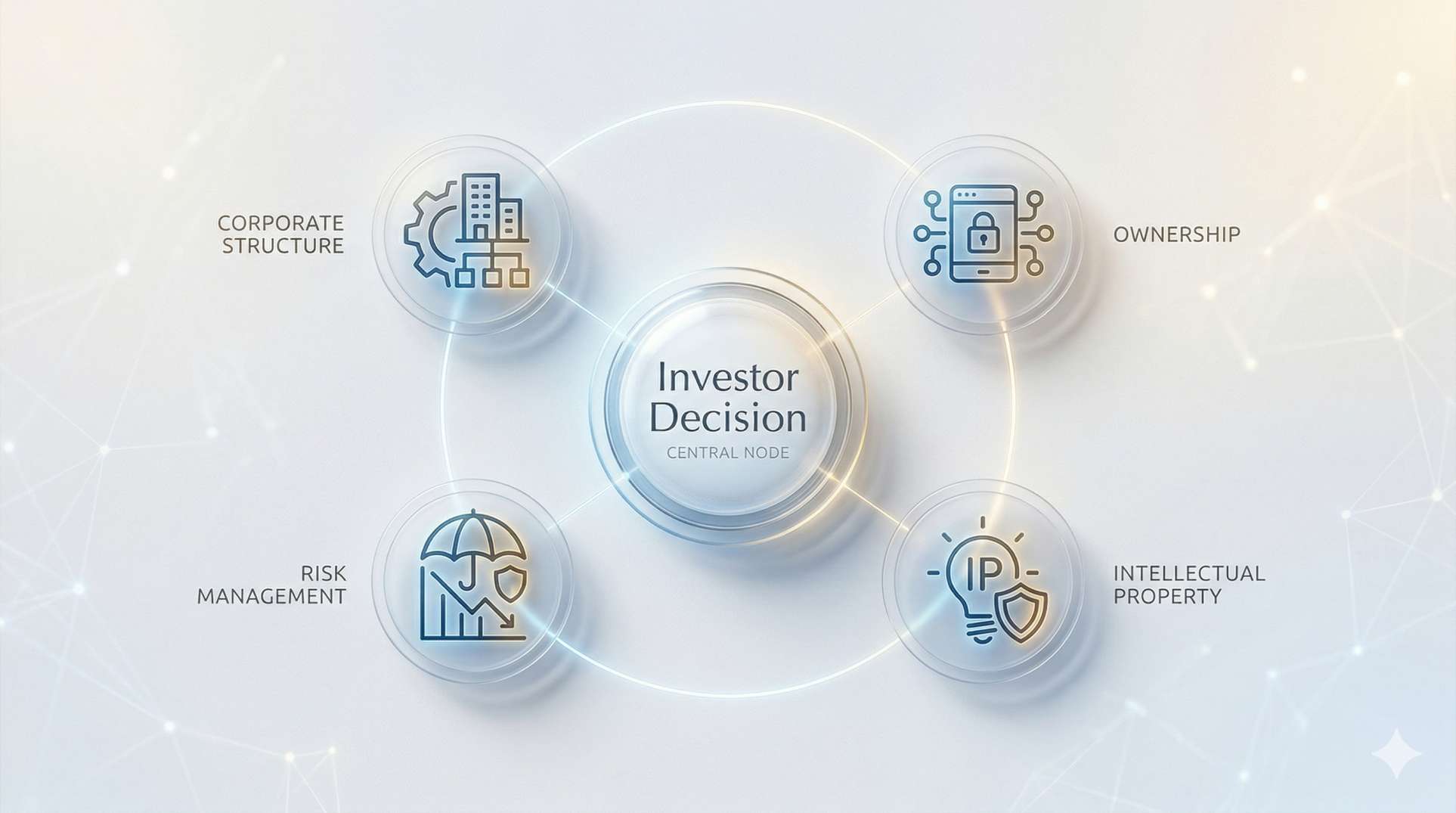
Investors use legal diligence to answer four fundamental questions:
- Is the company structurally sound and compliant?
- Is ownership clear and defensible?
- Are assets, IP, secure?
- Are there hidden liabilities that could surface later?
If answers are unclear, investors hesitate.
If answers are negative, they walk away.
Legal readiness doesn’t just protect your startup; it directly impacts your valuation, negotiation power, and deal velocity.
1. Incorporation & Corporate Architecture: Build It Right from Day One
Choose the Right Entity Structure
In India, the gold standard for fundraising is:
- Private Limited Company (Pvt Ltd)
This structure enables:
- Seamless equity issuance
- Defined governance frameworks
- Smooth onboarding of investors
- Scalability for future rounds
LLPs or sole proprietorships may work early on, but they complicate funding, especially with institutional investors and foreign capital.
Core Corporate Documents You Must Have
Ensure your foundational documents are complete and aligned:
- Certificate of Incorporation
- Memorandum of Association (MoA)
- Articles of Association (AoA)
- PAN, TAN, GST registrations
Pro Insight
Your AoA should not be generic. It must already anticipate:
- Share transfer mechanisms
- Investor rights
- Dilution provisions
- ESOP flexibility
Retrofitting these later slows down deals. Getting them right early accelerates them.

Regulatory Compliance Hygiene
Investors expect zero compliance gaps.
Ensure:
- ROC filings (AOC-4, MGT-7) are up to date
- Board meetings are properly recorded
- Statutory registers are maintained
A single missed filing can trigger deeper scrutiny.
2. Cap Table & Equity Structure: Precision Builds Trust
Maintain a Clean, Transparent Cap Table
Your capitalization table must clearly reflect:
- Founder shareholding
- ESOP pool allocation
- Previous investments
- Convertible instruments (if any)
Avoid:
- Informal equity promises
- Undocumented share transfers
- Excessive micro-shareholders
Clarity here signals maturity. Confusion signals risk.
Founder Agreements: The Non-Negotiable Backbone
A robust Founder’s Agreement must define:
- Roles and responsibilities
- Equity ownership
- Vesting schedules (typically 3–4 years with a 1-year cliff)
- Exit and dispute resolution mechanisms
Critical Clauses to Include
- IP ownership by the company
- Non-compete and non-solicitation
- Drag-along and tag-along rights
Investor perspective: Misaligned founders are one of the biggest deal-breakers.

3. Intellectual Property: Secure Your Competitive Moat
Own What You Build
Your intellectual property is often your most valuable asset:
- Brand name and logo
- Software code
- Product designs
- Proprietary processes
Essential IP Actions
- Register trademarks in relevant classes
- File patents (if applicable)
- Ensure copyright ownership
- Maintain an internal IP register
IP Assignment: The Most Overlooked Risk
Every founder, employee, and contractor must sign agreements ensuring:
- Full IP assignment to the company
- Confidentiality obligations
If your company doesn’t legally own its IP, investors aren’t investing in your business; they’re investing in uncertainty.

4. Contracts & Commercial Agreements: Structure Every Relationship
Organize Your Contractual Ecosystem
Investors will review:
- Client agreements
- Vendor contracts
- Partnership agreements
- NDAs
Standardization is Critical
Avoid inconsistent or copied templates. Instead:
- Use professionally drafted agreements
- Clearly define obligations and liabilities
- Include termination and dispute clauses
Well-structured contracts signal operational discipline and reduce perceived risk.
5. Regulatory Compliance: Zero Tolerance for Gaps
Core Compliance Areas
- Companies Act, 2013
- GST filings
- Income tax returns
- TDS compliance
Industry-Specific Regulations
Depending on your sector:
- Fintech → RBI regulations
- Healthtech → Medical compliance
- SaaS/Data → DPDP Act readiness
2026 Reality: Data Compliance is Now a Deal Factor
With the Digital Personal Data Protection (DPDP) Act in focus, ensure:
- Privacy policy and terms of use
- Consent mechanisms
- Data protection protocols
Startups handling user data without compliance frameworks are high-risk investments.

6. Employment & ESOP Structuring: Institutionalize Your Team
Formalize Your Workforce
Even early-stage startups must maintain:
- Employment agreements
- Offer letters
- HR policies
Critical Legal Clauses
- Confidentiality
- IP assignment
- Non-compete / non-solicit
- Termination conditions
ESOP Readiness
If offering equity:
- Create a formal ESOP policy
- Define vesting schedules
- Obtain board and shareholder approvals
A structured ESOP plan signals long-term thinking and talent retention strategy.
7. Financial & Tax Readiness: Transparency Wins Deals
Maintain Investor-Grade Financials
Prepare:
- Audited financial statements
- Profit & loss statements
- Cash flow statements
Tax Compliance Checklist
- GST filings up to date
- TDS properly deducted and deposited
- No outstanding liabilities
Strategic Tax Positioning
- Explore startup tax benefits
- Ensure valuation compliance
- Prepare for future foreign investment
Financial clarity builds confidence. Financial ambiguity destroys it.
8. Litigation & Risk Management: Transparency Over Perfection
Disclose All Risks
Be upfront about:
- Ongoing litigation
- Past disputes
- Regulatory notices
Prepare a Risk Mitigation Framework
- Legal risk assessment reports
- Contingency strategies
Investors don’t expect a risk-free company, they expect a well-prepared one.
9. Due Diligence Readiness: Speed is a Competitive Advantage
Build a Structured Data Room
Include:
- Corporate documents
- Financial records
- Contracts
- IP documentation
- Compliance filings
Key Investment Documents to Prepare
- Term Sheet (for negotiation readiness)
- Shareholders’ Agreement (SHA)
- Share Subscription Agreement (SSA)
Prepared startups close faster. Unprepared startups lose momentum.
10. Common Mistakes That Kill Funding Rounds
Even promising startups fail due to avoidable errors:
- Ignoring legal structure in early stages
- Using generic or copied contracts
- Delaying compliance filings
- Not securing intellectual property
- Unclear founder equity splits
Each of these can become a deal-breaker during due diligence.
How Aculegal Transforms Startups into Investment-Ready Businesses
At Aculegal, we don’t just provide legal services, we build legal infrastructure for growth.
Through our Virtual Chief Legal Officer (VCLO) model, we deliver:
- End-to-End Contract Management
- Due Diligence Readiness
- Proactive Compliance Monitoring
- Intellectual Property Protection
- Strategic Legal Advisory
All without the inefficiencies of traditional hourly billing.
We don’t just solve legal problems, we prevent them before they impact your growth.

Conclusion: Legal Readiness is Your Hidden Growth Engine
Fundraising is not just about storytelling, it’s about structural credibility.
A strong legal foundation:
- Accelerates funding timelines
- Increases investor confidence
- Strengthens negotiation power
- Enhances valuation
- Prevents future disputes
In today’s competitive ecosystem, legal readiness is no longer a backend function, it is a strategic growth lever that directly impacts valuation, investor trust, and execution speed.
Build Before You Pitch
Before you approach investors, ask yourself:
Are you truly investment-ready or just hopeful?
Let Aculegal help you build a legally मजबूत foundation that investors trust.
👉 Get your startup funding-ready with our VCLO services
👉 Book a consultation and eliminate legal risks before they cost you deals