Why Template Contracts Are Dangerous for Growing Businesses

template contracts dangerous for growing businesses

That free contract you downloaded in 10 minutes could cost your business ₹10 lakhs – or more.

Template contracts are dangerous for growing businesses, and most founders don’t realize it until they’re staring at a legal dispute they never saw coming. You trusted a generic document from the internet. Now you’re trying to explain to a client, co-founder, or investor why a critical clause doesn’t hold up.

This isn’t a rare edge case. This is happening every day – to startups, SMEs, and ambitious founders who believed a boilerplate template was “good enough.”

It isn’t. And here’s exactly why.

Are Free Contract Templates Legally Safe for Businesses?Startup founder downloading free online contract template with hidden legal risks

The honest answer: Rarely. And almost never for a growing business.

Free or templated contracts are built for the average case. Your business isn’t average. You have specific revenue models, jurisdiction-specific obligations, unique vendor relationships, and risks that a generic document was never designed to address.

Consider this: approximately 12 million contract lawsuits are filed against small businesses every year, with the average liability suit costing at least $54,000. Most of these disputes stem from ambiguous terms, missing clauses, or agreements that simply weren’t tailored to the actual business relationship.

The legal landscape doesn’t give credit for good intentions. A poorly drafted contract is treated the same as a deliberately bad one.

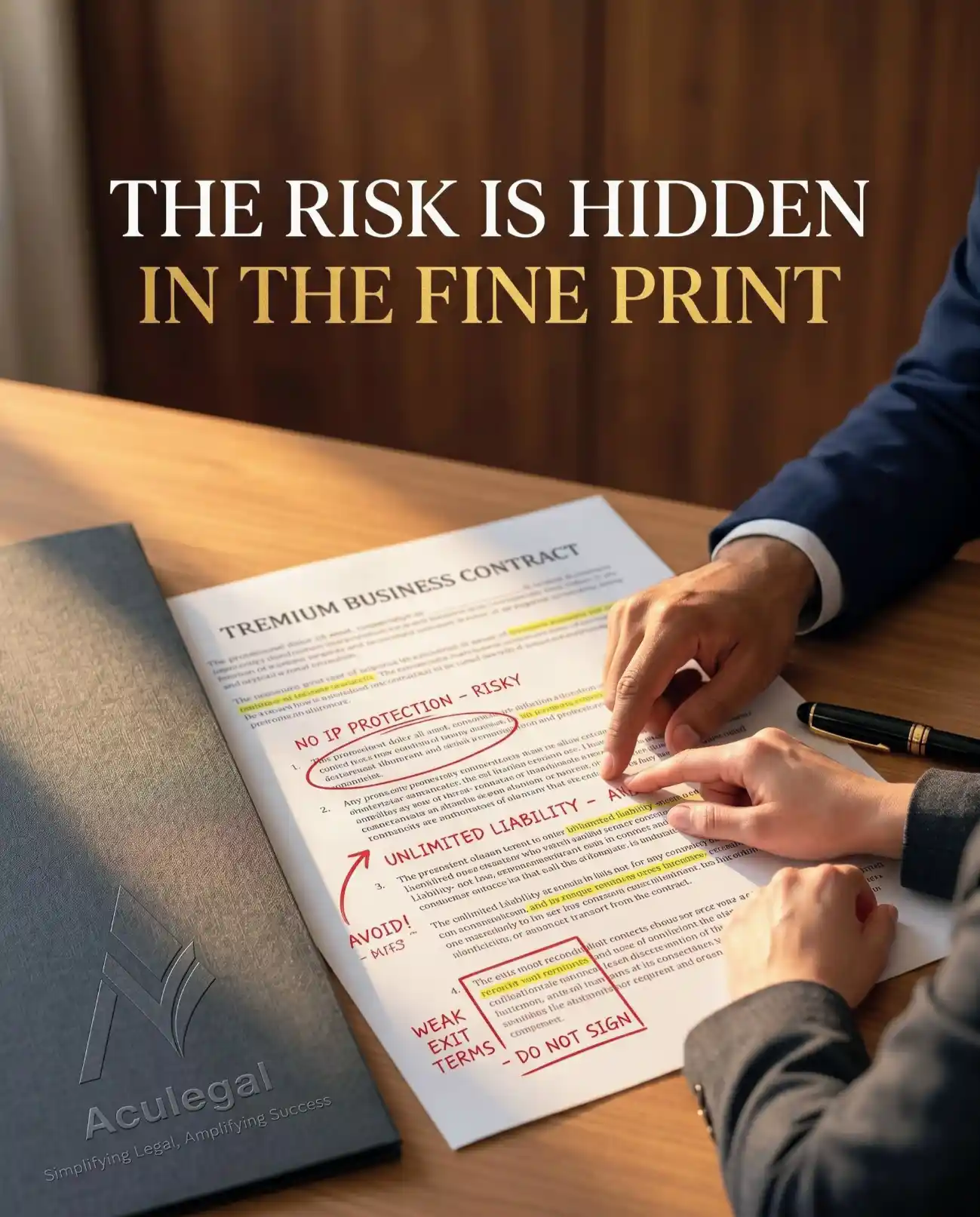
The Hidden Traps Inside Template ContractsBusiness contract showing missing clauses and hidden legal loopholes
1. They’re Built for a Different Country (or a Different Business)

Most free contract templates are drafted under U.S. or U.K. law. If you’re operating in India, those jurisdictions, limitation periods, dispute resolution clauses, and regulatory references are irrelevant – or worse, actively misleading.

A template that references “at-will employment” or U.S. arbitration rules isn’t just unhelpful for an Indian business. It can create confusion, ambiguity, and unenforceability in Indian courts. Jurisdiction matters. Generic templates ignore it entirely.

2. Critical Clauses Are Missing or Wrong

Standard templates are stripped of clauses that protect your specific business model. What’s missing often matters more than what’s there. Here are some of the most commonly absent or poorly written provisions:

  • Intellectual Property (IP) ownership – Who owns the work your freelancer or agency creates for you?
  • Payment terms and penalty clauses – What happens when a client delays payment for 90 days?
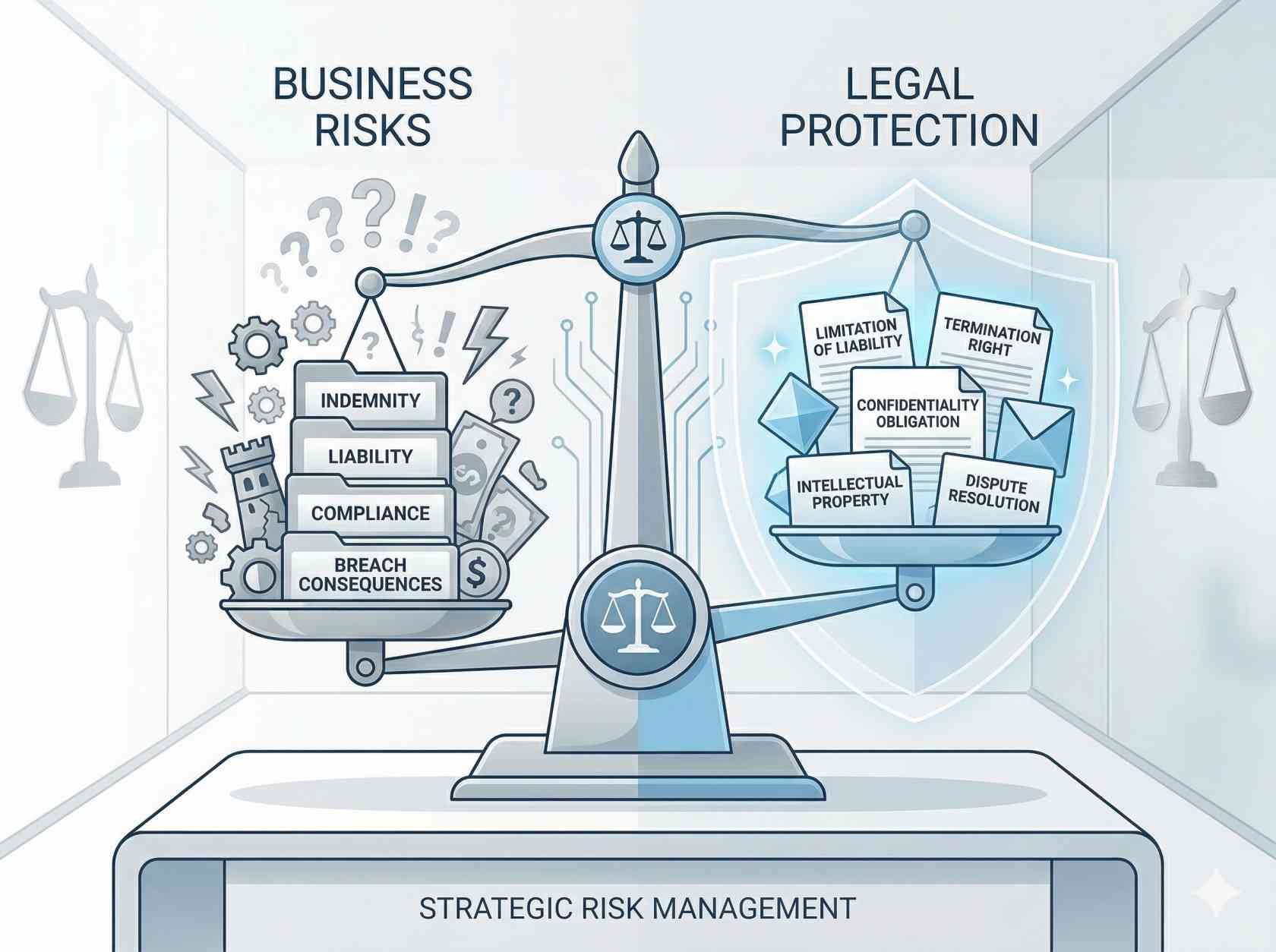
  • Limitation of liability – Are you capped at reasonable exposure, or exposed to unlimited claims?
  • Termination and exit conditions – Can either party walk away cleanly, or are you trapped?
  • Data protection and confidentiality – Does your NDA actually protect sensitive business information?

Legal experts consistently note that while templates provide a starting point, each business has unique characteristics that require customization. Skipping that customization is not a shortcut. It’s a gamble.

3. Ambiguous Language Creates Disputes – Not Prevents Them

Here’s the irony: a contract is supposed to prevent disputes. A bad contract creates them.

Many online business contract templates are packed with legal jargon – terms like “indemnify,” “joint and several liability,” and “caveat emptor” that most founders can’t confidently interpret. If you don’t understand what a provision means for your business, you cannot predict how it will be enforced against you.

Ambiguous language is the single biggest driver of contract disputes. When two parties walk away from signing with different understandings of the same clause, litigation is almost inevitable.

4. They’re Often Outdated

Laws change. Regulations evolve. Data protection standards like India’s Digital Personal Data Protection Act (DPDPA) introduced new obligations that contracts signed even two years ago don’t address. Using outdated contract templates can expose your business to unenforceable terms and costly disputes – particularly in fast-moving sectors like fintech, SaaS, e-commerce, and healthcare.

A contract that was compliant in 2022 may be non-compliant today. And you wouldn’t know it.Business dispute causing financial and operational losses for startup founders

The Real Cost of Getting This Wrong

This isn’t a theoretical risk. It’s a financial reality.

The numbers tell the story clearly:

  • Businesses globally spend an estimated $870 billion annually on contract dispute resolution
  • Ineffective contract management costs companies an average of 9.2% of their annual revenue
  • Resolving a ₹83 lakh (~$100,000) contract dispute can cost approximately ₹10 lakh (~$12,000) in legal fees alone
  • Breach of contract cases saw a 15% increase in 2023, with claimants succeeding three times more often when clear, written agreements existed

For a startup or SME, a single contract dispute doesn’t just cost money. It derails operations, damages relationships, kills investor confidence, and consumes founder time that should be spent building the business.

The false economy is stark: you save ₹10,000–₹50,000 on legal drafting. You risk ₹10 lakh+ in litigation.

When Template Contracts Hurt You the MostInvestors reviewing poorly drafted startup contracts during due diligence

During Fundraising and Due Diligence

Investors examine every contract your business has signed. Vague or poorly drafted agreements with co-founders, early employees, contractors, and vendors are immediate red flags. They signal operational immaturity. They slow or kill deals.

Your contracts are a mirror of your business governance. If they’re sloppy, so is the perception of your leadership.

When You’re Scaling Fast

Fast-growing businesses onboard vendors, hire talent, and close clients at pace. Template contracts signed in a rush during a growth sprint often create serious structural problems – worker misclassification, missing IP assignments, payment ambiguities – that become expensive to unwind later.

Rushing contract sign-offs traps founders in one-sided or unclear terms – a one-hour legal review now prevents months of disputes later.

When a Key Business Relationship Breaks Down

Co-founder disputes. A vendor who doesn’t deliver. A client who refuses to pay. A contractor who claims IP ownership. These situations happen in every business. What determines the outcome is almost always the quality of the contract.

A well-drafted contract doesn’t just protect you when things go right. It protects you when things go wrong.

What a Custom Business Contract Actually Does for YouProfessionally drafted business contract providing legal clarity and protection

A professionally drafted contract isn’t just legal paperwork. It’s a strategic business tool. Here’s what it delivers:

  • Clarity – Both parties understand exactly what is expected, by when, and under what conditions
  • Protection – IP, payments, data, and liability are explicitly safeguarded
  • Enforceability – Courts can actually uphold your agreement if challenged
  • Professionalism – Clients, investors, and partners take your business more seriously
  • Scalability – As your business grows, your contracts grow with it – not against it

At Aculegal, we believe legal infrastructure isn’t a cost center. It’s a growth enabler. That’s why our positioning is simple: “Simplifying Legal. Amplifying Success.”

What Aculegal Recommends for Startups and SMEs

Step 1: Conduct a Contract Audit

Before your next funding round, major vendor agreement, or client onboarding, get your existing contracts reviewed. Many businesses are sitting on agreements that expose them to liability they don’t know about.

Step 2: Use Jurisdiction-Specific, Business-Specific Drafting

Every contract your business signs should be drafted or reviewed by a legal professional who understands Indian law, your industry, and your specific risk profile. Not the law of a country you don’t operate in.

Step 3: Build a Legal Foundation Before You Need It

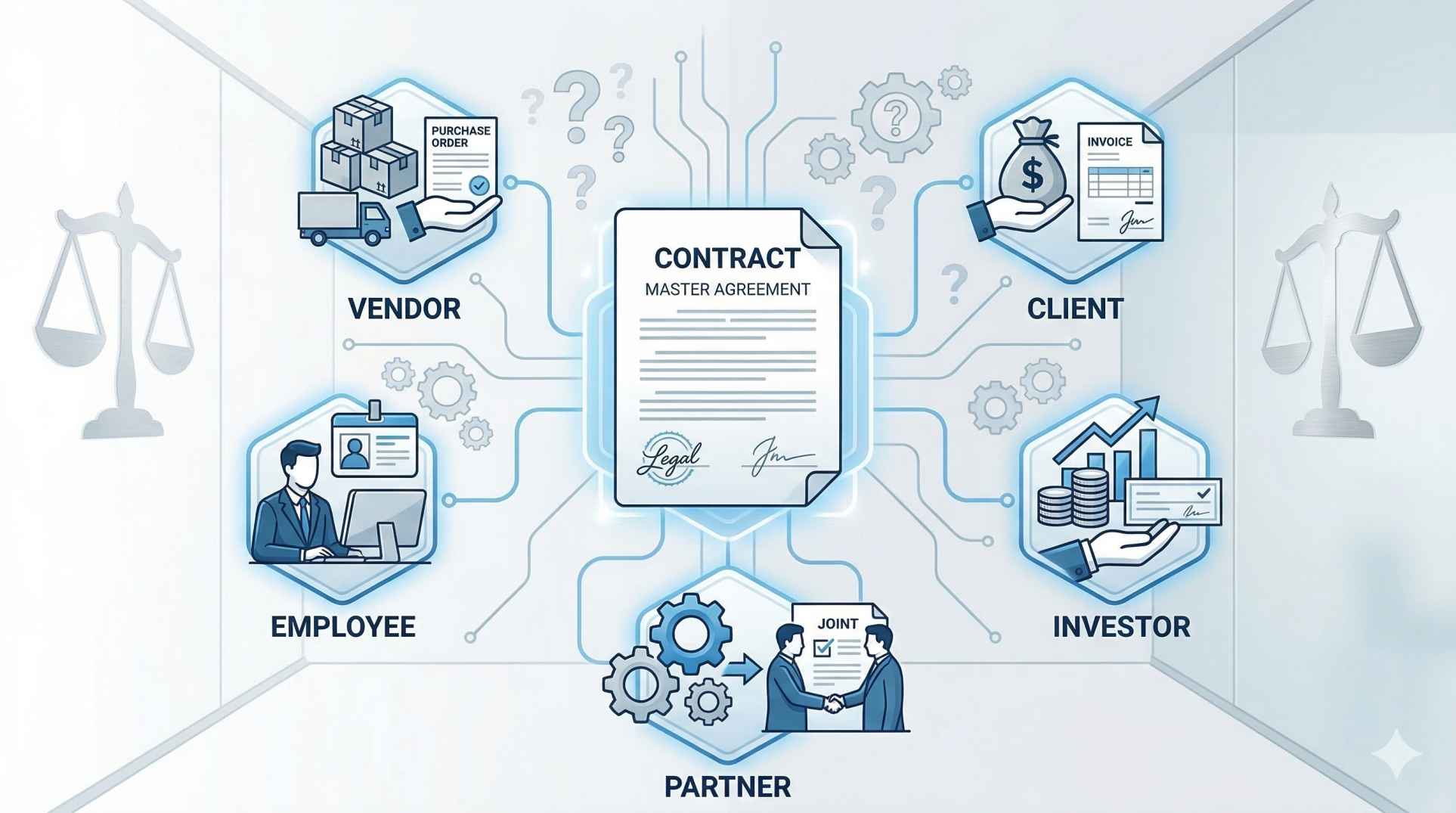
The best time to fix your contracts is before a dispute arises. Proactive legal work is always cheaper than reactive litigation. Whether it’s co-founder agreements, vendor contracts, client MSAs, or employment agreements – get them right the first time.

The Bottom Line: Template Contracts Are a Silent Business Risk

Template contracts are dangerous for growing businesses not because they’re always completely wrong, but because they create a false sense of legal protection. You think you’re covered. You’re not.

A contract built for everyone protects no one specifically.

Founders and SME owners who invest in proper legal drafting early don’t just avoid disputes. They build credibility, close deals faster, attract better partners, and scale with confidence. Legal clarity is competitive advantage.

At Aculegal, we work with founders, startups, and growing businesses to turn legal complexity into business clarity. We draft, review, and structure contracts that actually protect your interests in plain language, with precision, and built for the way your business actually operates.Professional legal consultation for startups and growing businesses

Ready to Protect Your Business the Right Way?

Stop relying on templates that weren’t built for you. Book a free consultation with Aculegal today and let our team review your existing contracts — or draft new ones that give your business the legal foundation it deserves.

📞 +91 9681232386 | 🌐 Website | 📋 Book a Free Consultation

Simplifying Legal. Amplifying Success.


Sources:

  1. The Zebra — Small Business Statistics
  2. Loft Legal — Legal Templates for Startups 2025
  3. Gouchev Law — Dangers of Free Online Contracts
  4. Concord — Hidden Costs of Ineffective Contract Management
  5. Medium/Kritika Nahate — Why Standard Contract Templates Are a Startup’s Silent Killer

Reducing Legal Risk: A Startup Guide to Jan Vishwas Reforms

Jan Vishwas reforms helping Indian startups reduce legal risk and scale confidently

Imagine launching your innovative startup in India—only to face criminal prosecution, hefty fines, and months of legal battles over a minor paperwork slip or technical compliance error. For thousands of Indian founders, this was once a daily nightmare. Today, the Jan Vishwas Reforms are rewriting the rules.⁠Cnbctv18

Indian startup founder facing legal compliance stress and risk before Jan Vishwas reforms

These landmark changes, starting with the Jan Vishwas (Amendment of Provisions) Act, 2023 and amplified by the newly passed Jan Vishwas (Amendment of Provisions) Bill, 2026, decriminalise minor offences, replace jail threats with civil penalties, and usher in trust-based governance. The result? A massive boost to ease of doing business and a safer path for startups to scale without fear.⁠Youtube

If you’re a founder, CTO, or compliance lead in India, this guide shows exactly how the Jan Vishwas Reforms slash legal risks and why acting now can save your startup time, money, and peace of mind.

The Problem: Why Legal Risks Once Crushed Indian Startups

Complex regulatory burden and legal compliance maze for startups in India

Indian startups have long battled a complex web of central and state laws. Minor lapses, late filings, labelling errors, or procedural oversights often triggered criminal liability, including imprisonment.

Key pain points before reforms:

  • Over 1,000 offences across dozens of laws carried jail terms, even for first-time, non-fraudulent mistakes.
  • High compliance costs drained precious runway, especially for bootstrapped MSMEs and early-stage ventures.
  • Fear of prosecution deterred innovation, delayed hiring, and scared investors wary of regulatory red flags.
  • Prolonged litigation clogged courts, tying up founders and capital for years.

In a country racing toward a $5-trillion economy, these outdated rules were holding back the very entrepreneurs building Viksit Bharat.

The Solution: Jan Vishwas Reforms, Decriminalisation at Scale

Shift from criminal penalties to civil compliance under Jan Vishwas reforms in India

The Jan Vishwas (Amendment of Provisions) Act, 2023, decriminalised 183 provisions across 42 Central Acts. The Jan Vishwas Bill 2026 builds on this by amending 784 provisions across 79 Central Acts administered by 23 Ministries, with 717 provisions fully decriminalised.⁠Cnbctv18

Together, they mark one of India’s biggest pushes toward trust-based governance.

Core features of the reforms:

  • Imprisonment removed for minor, technical, and procedural defaults (57 provisions).
  • Jail + fine converted to civil penalties only (113 provisions).
  • Warnings for first-time offences in many cases.
  • Graded monetary penalties based on turnover or impact – far more proportionate for startups.
  • Adjudication by officers (not courts) for faster resolution.
  • Compounding of offences and simplified appeals introduced.
  • Periodic 10% increase in fines/penalties every three years to maintain relevance.

Infographic showing Jan Vishwas reforms statistics including 717 decriminalised provisions across 79 Acts

The message is clear: honest mistakes no longer mean criminal records. The government is shifting from fear to trust-based governance. Pib

Key Changes Every Startup Must Know

Intellectual Property Laws Get a Major Overhaul

Intellectual property protection for startups in India after Jan Vishwas reforms

Startups live and die by patents, trademarks, and copyrights. The 2023 Act decriminalised several offences under the Patents Act, 1970, Trade Marks Act, 1999, Copyright Act, 1957, and Geographical Indications Act, 1999.Aarnalaw

  • False statements or minor filing lapses now attract civil penalties (up to ₹10 lakh in many cases) instead of jail.
  • Turnover-linked fines ensure that small innovators are not disproportionately punished.
  • Faster adjudication means quicker protection, and fewer legal distractions.

Environment, Pollution, and Sustainability Compliance Becomes Manageable

Simplified consumer law compliance for D2C and ecommerce startups in India

Many deep-tech and manufacturing startups face strict rules under the Environment (Protection) Act, 1986, Air (Prevention and Control of Pollution) Act, 1981, and related laws.

  • Minor procedural violations now carry penalties (₹10,000–₹15 lakh) plus daily additions, no imprisonment.
  • First-time warnings replace immediate prosecution.
  • Appeals go to expert tribunals, streamlined and faster.

Food, Drugs, Cosmetics, and Consumer Laws Simplified


Food-tech, health-tech, and D2C brands benefit from changes in the Food Safety and Standards Act, Drugs and Cosmetics Act, and Legal Metrology Act.

  • Labelling errors or minor non-compliances shift from criminal to civil penalties.
  • Repeat offenders face graded fines, but honest first-timers get warnings.
  • Reduced litigation frees resources for product innovation and market expansion.

Other High-Impact Areas for Startups

  • Company law and filings: Minor delays or technical defaults no longer risk director disqualification or jail.
  • Labour and wages-related procedural lapses: Rationalised penalties reduce HR compliance stress.
  • Motor Vehicles and transport rules: Compounding options speed up logistics for delivery startups.

Bottom line: The Jan Vishwas Reforms cover the exact pain points that once made scaling in India feel like walking a legal minefield.

Proof It Works: Tangible Benefits and Early Wins

Startup growth and investor confidence in India after Jan Vishwas reforms

India Inc has welcomed the reforms. Industry bodies see them as a “game-changer” bringing clarity, predictability, and proportionality to compliance.

Real impact numbers:

  • The 2023 Act + 2026 Bill together rationalise more than 1,000 offences across central laws.⁠Deccanchronicle
  • Over 47,000 compliances reduced across the Centre and States since 2014, with Jan Vishwas as a major leap.⁠Devdiscourse
  • 717 provisions directly cut litigation load on courts and founders.

Startups and MSMEs now allocate saved time and money to R&D, hiring, and customer acquisition instead of lawyers. Sectors like fintech, healthtech, agritech, and manufacturing, once bogged down by overlapping rules, are seeing accelerated growth and greater investor confidence.

The reforms align perfectly with Make in India, Startup India, and Ease of Doing Business initiatives, positioning India as a global investment magnet.

How Your Startup Can Leverage Jan Vishwas Reforms Today

Reducing legal risk isn’t automatic—you still need smart compliance. Here’s your actionable checklist:

  1. Audit your current compliance against the amended 79 Acts, focusing on high-risk areas like IP, environment, and consumer laws.
  2. Train your team on the new warning + penalty regime so minor lapses don’t escalate.
  3. Appoint a compliance officer or partner with experts who track graded penalties and adjudication timelines.
  4. Build internal SOPs that prioritise timely filings and documentation, now more important than ever.
  5. Stay updated on state-level alignments and future 10% periodic penalty revisions.

Pro tip: Document everything. The shift to civil penalties rewards transparency and due diligence.

Conclusion: Turn Legal Risk into Your Competitive Edge

The Jan Vishwas Reforms mark a historic shift from a punishment-first regime to one that trusts entrepreneurs. By decriminalising minor offences (717 provisions), rationalising penalties, and introducing warnings and adjudication, the government has handed Indian startups a powerful shield against unnecessary legal risk.

You can now focus on what matters: building groundbreaking products, creating jobs, and driving India’s growth story.

Don’t leave compliance to chance.

At Aculegal, we specialise in helping Indian startups navigate the Jan Vishwas Reforms with precision. Our team offers:

  • Comprehensive compliance audits tailored to your sector
  • Risk-mapping against the 79 amended Acts
  • Training workshops for founders and teams
  • Ongoing advisory to keep you ahead of regulatory changes

Strategic legal support for startups in India through Aculegal VCLO services

Ready to reduce legal risk and accelerate growth?

Book a free 30-minute Jan Vishwas Compliance Strategy Call with our experts today. Visit www.aculegal.com or drop us a line at contact@aculegal.com or schedule a call with this link https://shorturl.at/stv7B

Your startup deserves to thrive without the fear of outdated laws holding you back.

Let’s build the future, legally and fearlessly.

Why Most Business Disputes Start in Contracts (And How Smart Companies Prevent Them)

business-contract-disputes|Aculegal

Introduction

Every business deal begins with excitement — a signed contract, a handshake, and big plans. Yet, for too many companies, that same document quietly becomes the spark that ignites costly disputes, drained resources, and damaged relationships.

Contract disputes account for approximately 65% of all commercial litigation cases. In India, poor contract management and delays in performance top the list of triggers, according to industry surveys. The numbers are clear: most business fights don’t start in courtrooms or boardrooms — they start in the fine print you overlooked.

At Aculegal, we see it every day. Businesses in India, across cities, lose millions not because of bad partners, but because of preventable contract weaknesses. This blog uncovers exactly why disputes explode from contracts and shows you how to stop them cold.

This article explores why most business disputes originate in contracts and how businesses can prevent these risks through strategic legal structuring.

business-contract-relationships-framework

The Statistics Don’t Lie: Contracts Fuel Most Business Conflicts

Contract-related issues dominate business litigation worldwide and in India. Studies show they make up nearly half of civil filings in many courts. In our commercial landscape, the Commercial Courts Act, 2015, was created precisely because contract disputes clog the system.

Why so common? Contracts govern every deal — suppliers, clients, employees, partners. One weak clause and the entire relationship unravels. Indian businesses report that 95% feel they leave money on the table during negotiations, with post-signing value leakage averaging 9%.

The result? Delayed projects, unpaid invoices, and court battles that drag on for years.

Short paragraphs like these make the truth hit harder: your contract isn’t just paperwork, it’s your business shield or your hidden landmine.

Root Cause #1: Ambiguous Language — The Silent Dispute Starter

Vague words are the #1 killer. Phrases like “reasonable time,” “best efforts,” or “market standard” sound professional but invite different interpretations.

What happens next? One party thinks “delivery in 30 days” means calendar days. The other insists on working days. Suddenly, you’re arguing over definitions instead of growing.

Under the Indian Contract Act, 1872, courts look at the plain meaning of words. Ambiguity often leads to expensive litigation where judges decide what you “meant.”

Real-world impact in India: Supplier contracts in manufacturing frequently collapse over unclear quality specifications. Service agreements with freelancers blow up because “satisfactory performance” was never defined.
ambiguous-contract-language-dispute-risk -Aculegal

Root Cause #2: Missing Critical Clauses That Leave You Exposed

Many contracts are rushed templates missing vital protections. Without them, small issues snowball into full-blown disputes.

Essential clauses that businesses often skip:

  • Clear payment schedules and penalties for late payment
  • Force majeure provisions for unforeseen events (pandemic lessons still apply)
  • Detailed dispute resolution mechanisms (arbitration vs. court)
  • Termination rights and exit procedures
  • Confidentiality and non-compete protections
  • Governing law and jurisdiction (especially for cross-border deals)

In India, the absence of a proper arbitration clause under the Arbitration and Conciliation Act, 1996 forces parties into slow civil courts. One missing indemnity clause can leave you liable for huge third-party claims.

Pro tip: Never use a generic template for anything worth more than ₹5 lakh.

Root Cause #3: Failure to Perform Obligations — The Classic Breach

Even clear contracts fail when one party doesn’t deliver. Late deliveries, substandard work, or missed payments top the list of breaches.

Section 37 of the Indian Contract Act makes timely performance mandatory. Yet surveys show “delay in performance” as the most cited cause of commercial disputes in India.

Why does this happen?

  • Unrealistic deadlines set during negotiations
  • No monitoring mechanisms
  • Changing business priorities without formal amendments

Consequence: The aggrieved party can claim damages under Section 73, but proving actual loss in court is time-consuming and expensive.

cost-of-business-contract-disputes.

Root Cause #4: Unforeseen Circumstances and Poor Risk Allocation

Markets shift. Regulations change. Supply chains break. Contracts that ignore these realities create instant disputes.

The COVID-19 era exposed thousands of Indian contracts lacking robust force majeure clauses. Today, inflation, new GST rules, or export restrictions trigger similar fights.

Common gaps:

  • No price escalation clauses in long-term supply agreements
  • No change-in-law provisions
  • No clear responsibility for regulatory compliance

Businesses that allocate risk fairly upfront avoid 80% of these battles.

India-Specific Challenges: Why Disputes Hit Harder Here

India’s legal system adds unique pressure. While the Commercial Courts Act speeds up cases above ₹3 lakh, average resolution still takes 1–3 years.

Key Indian realities:

  • Strict enforcement under the Indian Contract Act, 1872
  • Growing use of arbitration for faster outcomes
  • High stakes in sectors like IT, manufacturing, real estate, and startups (think OYO revenue-sharing rows or supplier payment delays)

Poor contract drafting also leads to regulatory fines and compliance headaches. The result? Businesses lose not just money but momentum.

The Real Cost of Contract Disputes Is Beyond Legal Fees

Don’t think “we’ll just settle.” The hidden costs destroy businesses:

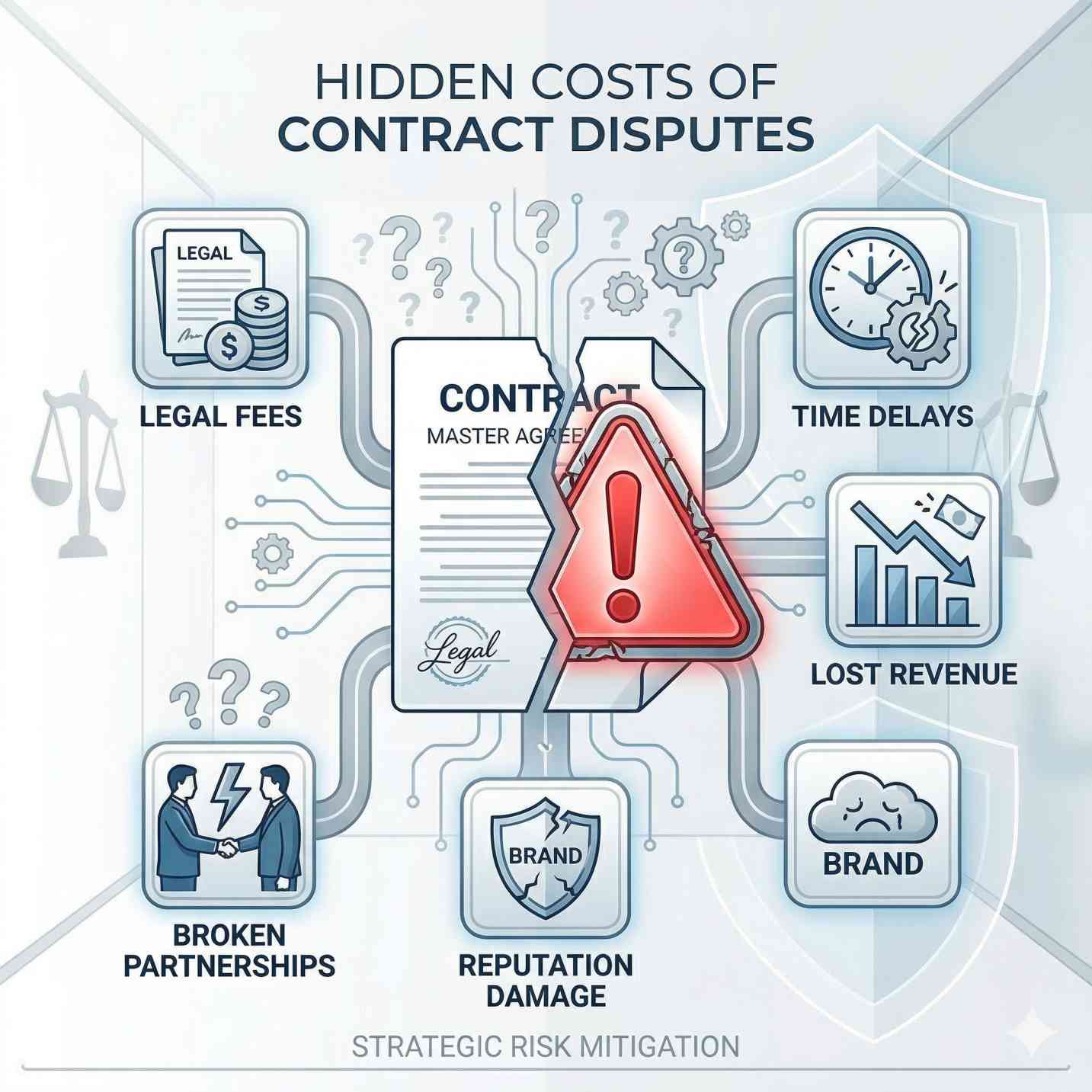
  • Financial drain: Legal fees, damages, and lost revenue
  • Time theft: Months or years diverted from growth
  • Reputation damage: Public disputes scare clients and investors
  • Opportunity loss: Deals stall while you fight
  • Relationship breakdown: Once-trusted partners become enemies

In India, one bad contract dispute can wipe out an entire year’s profit for SMEs.

Bulletproof Your Contracts: 7 Proven Prevention Strategies

Prevention beats cure every time. Follow these steps and watch disputes plummet:

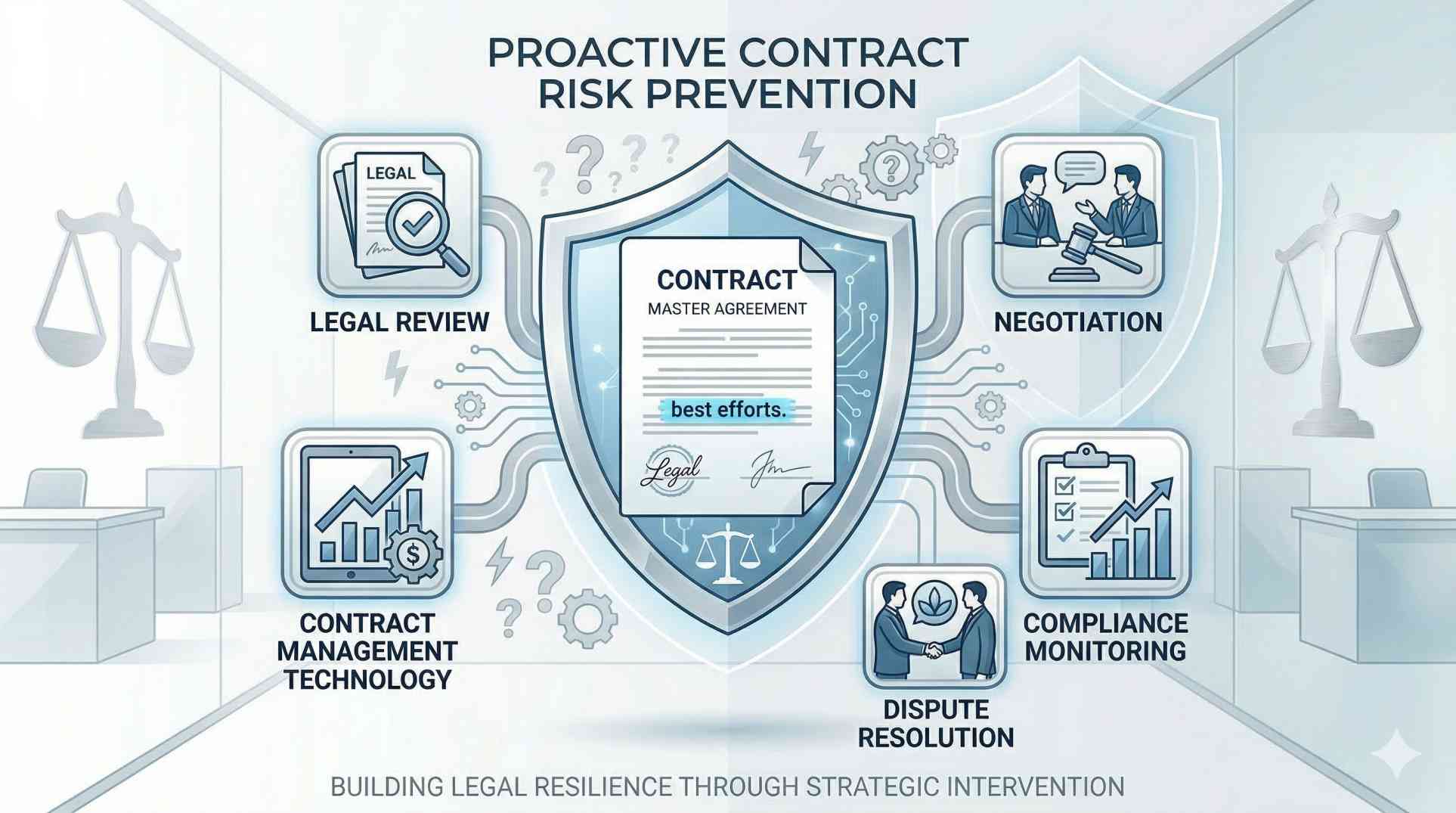
  1. Always involve legal experts early — Never let business teams finalise terms alone.
  2. Use plain, precise language — Define every key term in a dedicated section.
  3. Include comprehensive dispute resolution clauses — Prefer arbitration for speed and confidentiality.
  4. Build in regular review mechanisms — Schedule annual contract health checks.
  5. Document everything — Emails, amendments, and performance records must align with the contract.
  6. Test scenarios — Ask “what if” for every clause before signing.
  7. Leverage technology — Contract management software flags risks automatically.

Bonus: Conduct a full contract audit every 12 months. At Aculegal, we’ve helped clients reduce dispute risk by over 70% through proactive reviews.

When Disputes Do Arise: Smart Resolution Paths in India

Even strong contracts face issues. Choose wisely:

  • Negotiation — Fastest and cheapest
  • Mediation — Preserves relationships
  • Arbitration — Binding, private, and quicker than courts
  • Litigation — Last resort under the Commercial Courts

Pro move: Build escalation steps into every contract so you control the process instead of the courts deciding.


contract-risk-allocation-business-agreements

Conclusion: Turn Your Contracts from Risk to Rocket Fuel

Most business disputes start in contracts because of ambiguity, missing clauses, poor performance terms, and ignored risks. In India, delays and regulatory gaps make the problem even costlier.

Yet the solution is straightforward: treat contracts as living business assets, not afterthoughts. Draft clearly. Review regularly. Allocate risk fairly. Resolve smartly.

Your next deal doesn’t have to become your next dispute.

Ready to make your contracts dispute-proof?

At Aculegal, we specialise in end-to-end contract management — from smart drafting and airtight reviews to compliance and dispute resolution. Our Kolkata-based team has helped hundreds of businesses across India close deals faster, reduce risks, and grow without legal landmines.

Don’t wait for the next dispute to hit.

Schedule your free Contract Risk Assessment today.

Call us or visit aculegal.com to book a no-obligation consultation.

Protect your business. Amplify your success.

Aculegal- Simplifying Legal, Amplifying Success.

Business dispute arising from unclear contract terms and legal miscommunication

How Legal Audits Protect Companies From Future Disputes

How-Legal-Audits-Protect-Companies-From-Future-Disputes

Introduction

Most business disputes do not begin in courtrooms. They start quietly inside contracts, compliance records, operational decisions, and overlooked legal obligations.

A missing clause, an outdated policy, or a compliance oversight may appear insignificant at first. However, when disagreements arise between partners, vendors, regulators, or employees, these small gaps can quickly evolve into serious legal conflicts.

For many companies, legal action is the first moment they realize that their internal legal structure was never fully prepared to handle risk.

This is where legal audits become an essential part of modern business strategy.

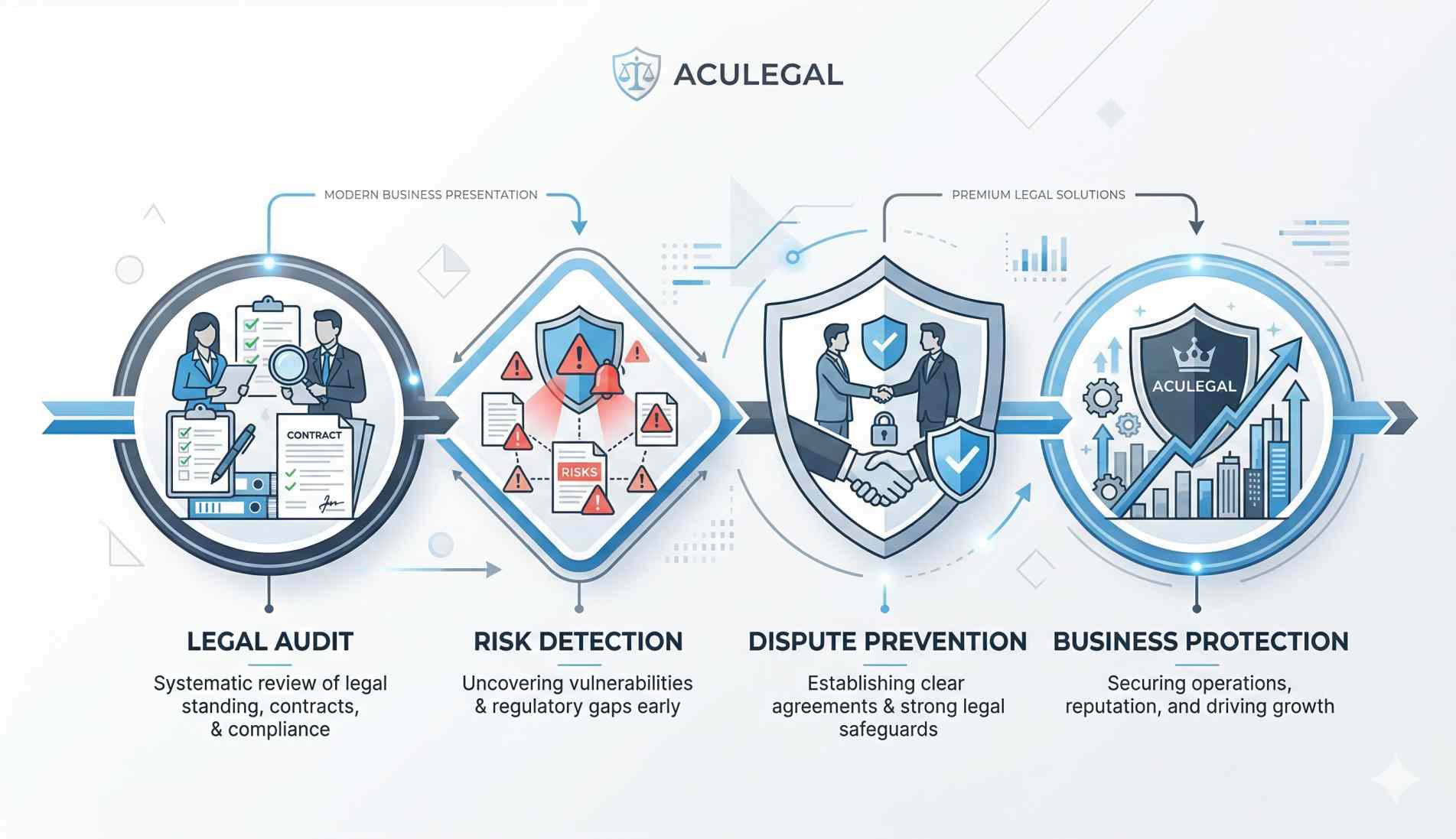
A legal audit is not simply about checking documents. It is a preventive legal mechanism designed to identify vulnerabilities before they turn into disputes, penalties, or litigation.

Companies that conduct structured legal audits regularly are far better equipped to protect their operations, reputation, and financial stability.

In this article, we explore how legal audits work, why they are essential for modern organizations, and how they help companies avoid costly disputes before they arise.

Audit-Aculegal

What Is a Legal Audit?

A Preventive Legal Health Check for Businesses

A legal audit is a systematic review of a company’s legal structure, policies, contracts, and compliance practices.

The purpose is to identify:

  • Legal risks
  • Compliance gaps
  • Weak contractual protections
  • Governance issues
  • Operational vulnerabilities

Instead of waiting for disputes to occur, a legal audit evaluates whether the company’s legal framework is strong enough to withstand potential conflicts.

Think of a legal audit as a legal health check for the organization.

Just as financial audits ensure financial accuracy, legal audits ensure that the business is legally protected and compliant with applicable laws.

Why Businesses Face Legal Disputes

The Hidden Causes of Corporate Conflicts

Many organizations assume that legal disputes arise only from major misconduct or intentional wrongdoing.

In reality, most disputes originate from structural weaknesses in business documentation and processes.

Common causes include:

  • Ambiguous contract terms
  • Missing liability limitations
  • Weak dispute resolution clauses
  • Unclear vendor obligations
  • Non-compliance with regulatory requirements
  • Improper documentation of corporate decisions

These issues often remain unnoticed until a disagreement arises. At that point, the company may discover that its legal protections are insufficient.

By the time litigation begins, correcting these weaknesses becomes far more expensive and complex.

Why Businesses Face Legal Disputes

Why Businesses Face Legal Disputes

The Hidden Causes of Corporate Conflicts

Many organizations assume that legal disputes arise only from major misconduct or intentional wrongdoing.

In reality, most disputes originate from structural weaknesses in business documentation and processes.

Common causes include:

  • Ambiguous contract terms
  • Missing liability limitations
  • Weak dispute resolution clauses
  • Unclear vendor obligations
  • Non-compliance with regulatory requirements
  • Improper documentation of corporate decisions

These issues often remain unnoticed until a disagreement arises. At that point, the company may discover that its legal protections are insufficient.

By the time litigation begins, correcting these weaknesses becomes far more expensive and complex.


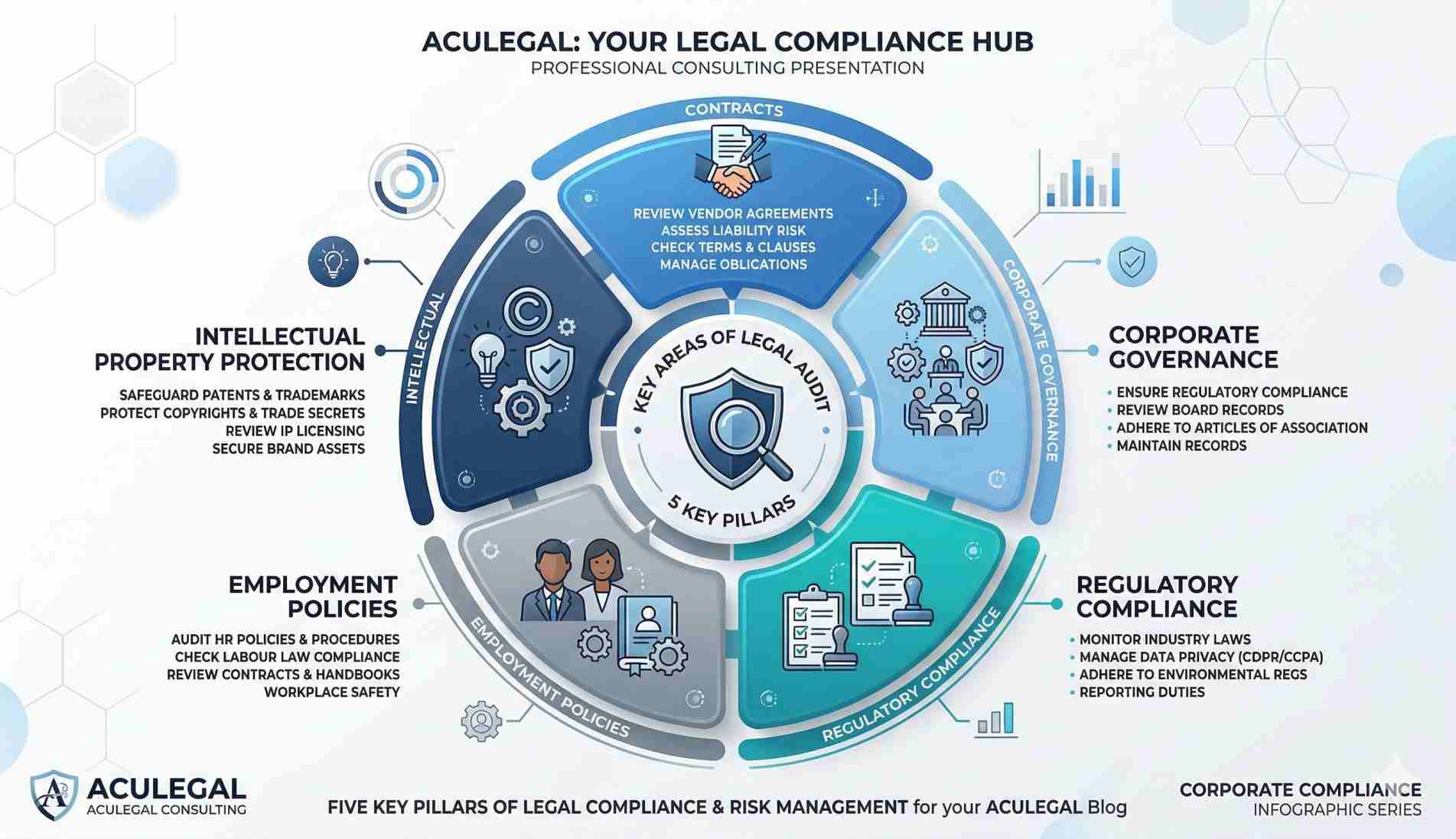
Key Areas Reviewed During a Legal Audit


1. Contracts and Commercial Agreements

Contracts form the foundation of most business relationships.

However, poorly drafted agreements are one of the most common sources of disputes.

Legal audits examine whether contracts include essential protections such as:

  • Clear roles and responsibilities
  • Termination rights
  • Dispute resolution mechanisms
  • Jurisdiction clauses
  • Indemnity provisions
  • Liability limitations

If contracts lack these safeguards, companies may face significant challenges when disagreements occur.

Strengthening contractual language during a legal audit significantly reduces litigation risk.

2. Corporate Governance and Documentation

Corporate governance ensures that the organization operates according to legal and regulatory standards.

Many companies fail to maintain proper governance documentation.

A legal audit reviews:

  • Board resolutions
  • Shareholder agreements
  • Director responsibilities
  • Statutory filings
  • Corporate records

Proper governance structures help prevent internal disputes between shareholders, directors, and management.

They also demonstrate legal credibility to regulators and investors.

3. Regulatory Compliance

Every business operates within a complex web of regulations.

Failure to comply with these requirements can lead to:

  • Regulatory penalties
  • Operational restrictions
  • Government investigations
  • Reputational damage

A legal audit evaluates whether the company is meeting all applicable statutory and regulatory obligations.

This may include compliance related to:

  • Corporate law
  • Labour regulations
  • Tax obligations
  • Data protection
  • Industry-specific regulations

Ensuring regulatory compliance significantly reduces the risk of government action against the company.

4. Employment and Workplace Policies

Employment disputes are among the most common legal challenges faced by businesses.

These disputes often arise from unclear policies or inconsistent practices.

A legal audit evaluates:

  • Employment contracts
  • Workplace conduct policies
  • Termination procedures
  • Disciplinary frameworks
  • Compliance with labour laws

Well-drafted employment policies protect both the organization and its employees, creating a transparent and fair workplace structure.

5. Intellectual Property Protection

For many companies, intellectual property is one of their most valuable assets.

However, businesses frequently overlook proper legal protection for their innovations.

Legal audits assess whether the organization has adequately protected:

  • Trademarks
  • Copyrights
  • Confidential information
  • Proprietary technology
  • Licensing agreements

Protecting intellectual property ensures that the company maintains exclusive control over its innovations and brand identity.

Key Areas of Legal Audit

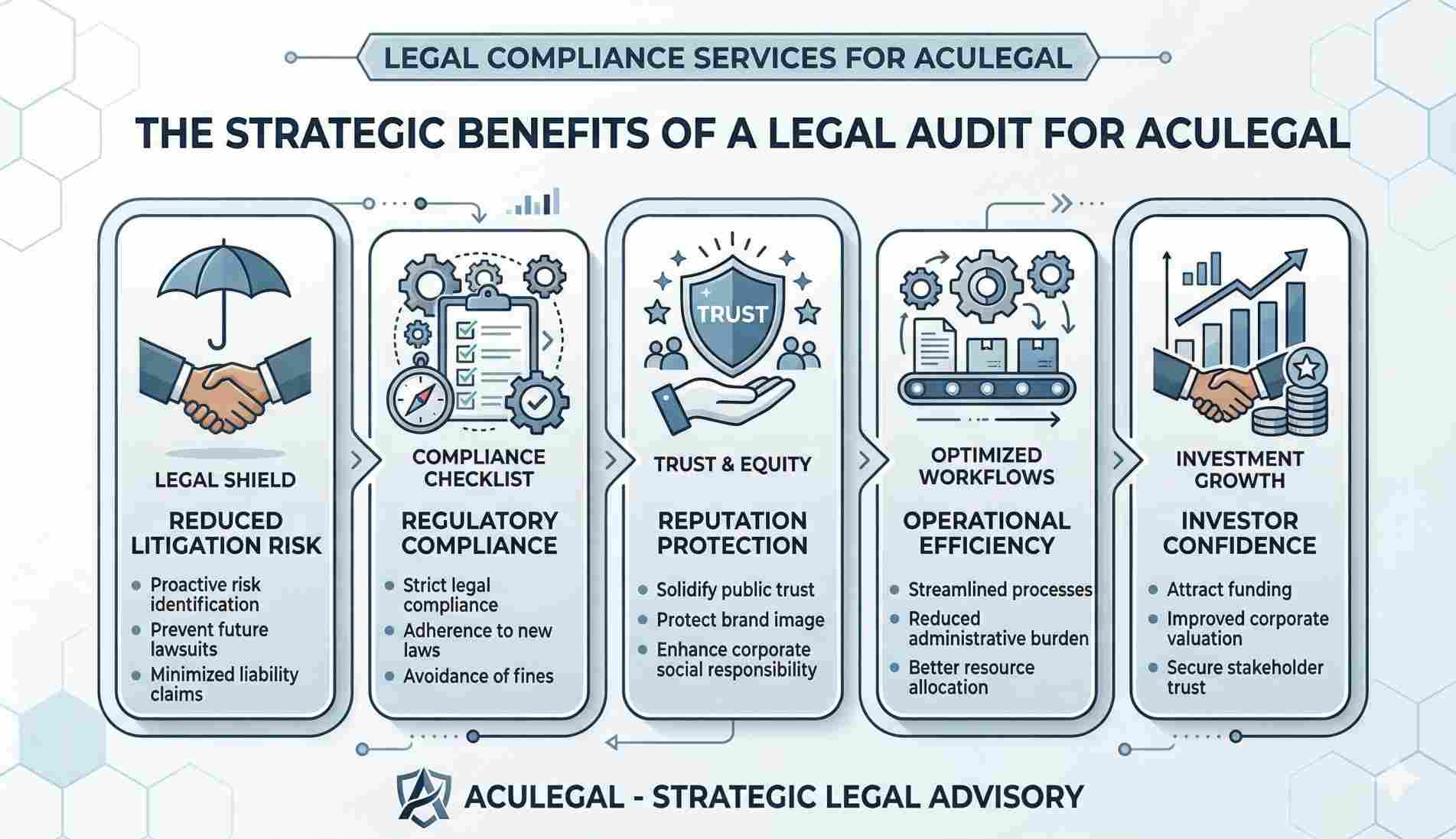
Benefits of Conducting Legal Audits


1. Preventing Costly Litigation

Litigation can consume significant time, money, and managerial attention.

Legal audits reduce the likelihood of disputes by strengthening contracts, policies, and compliance structures.

Preventing a dispute is almost always far less expensive than resolving one in court.

2. Enhancing Business Stability

A strong legal structure creates stability within the organization.

When governance systems, compliance frameworks, and contracts are clearly defined, business operations become more predictable and secure.

This stability allows leaders to focus on strategic growth instead of risk management.


3. Protecting Corporate Reputation

Legal disputes often attract public attention.

Negative publicity can damage relationships with customers, investors, and business partners.

By identifying and resolving legal vulnerabilities early, companies can protect their brand reputation and market credibility.

4. Improving Operational Efficiency

Legal audits often reveal inefficiencies in internal processes.

For example:

  • Duplicate documentation
  • Inconsistent contract management
  • Lack of standardized approval procedures

Addressing these issues not only improves legal protection but also enhances operational efficiency.

5. Building Investor and Partner Confidence

Investors and business partners evaluate legal risk before entering into relationships with companies.

Organizations that maintain structured legal frameworks demonstrate:

  • Professional governance
  • Strong risk management
  • Long-term reliability

This can significantly improve opportunities for investment, partnerships, and strategic collaborations.

Benefits of Legal Audits-Aculegal

When Should Companies Conduct Legal Audits?

Many businesses conduct legal reviews only after a problem has occurred.

However, the most effective legal audits are conducted proactively.

Companies should consider legal audits during key moments such as:

  • Business expansion into new markets
  • Rapid organizational growth
  • Mergers or acquisitions
  • Regulatory changes
  • Investment or funding rounds
  • Major operational restructuring

Regular legal audits ensure that the company’s legal framework evolves alongside its business growth and changing regulatory environment.

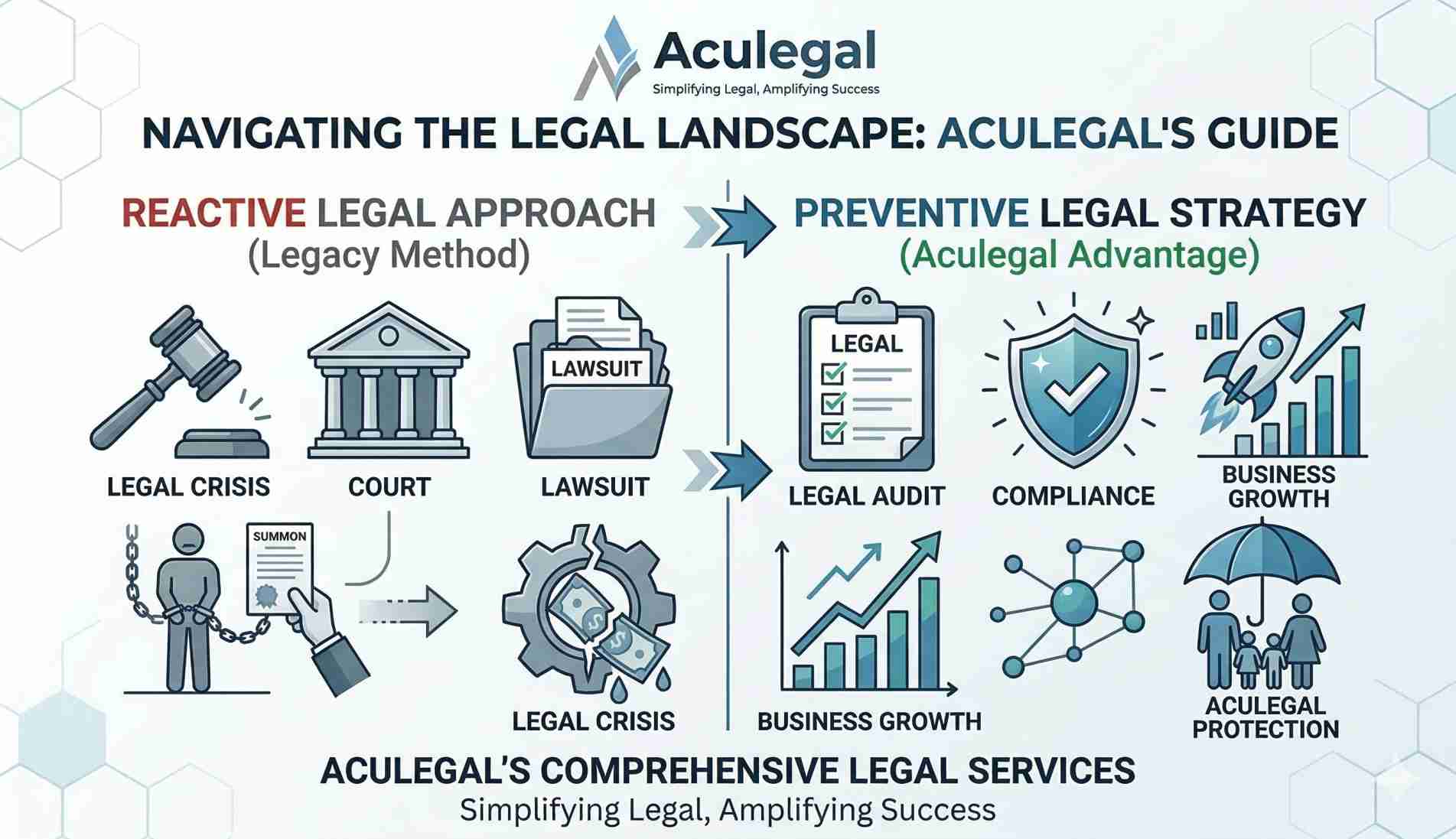
Legal Audits as a Preventive Business Strategy

Moving From Reactive Law to Strategic Legal Management

Traditionally, businesses engage legal professionals only when a dispute arises.

This reactive approach treats legal services as a problem-solving function.

However, forward-thinking companies now view legal functions differently.

They treat legal strategy as a core component of business risk management.

Legal audits play a crucial role in this preventive approach.

By identifying vulnerabilities early, organizations can strengthen their legal infrastructure before risks escalate.

This approach transforms legal functions from a reactive necessity into a strategic asset that supports business growth.

How Aculegal Supports Businesses Through Legal Audits

At Aculegal, we believe that the best legal dispute is the one that never happens.

Our legal advisory framework focuses on preventive legal protection.

Through structured legal audits, we help companies:

  • Identify hidden legal risks
  • Strengthen contracts and documentation
  • Improve compliance systems
  • Build strong governance frameworks
  • Reduce future litigation exposure

Our approach combines legal expertise with strategic business insight, ensuring that legal systems support business growth rather than restrict it.

By addressing vulnerabilities early, organizations can protect their operations, reputation, and long-term success.

Preventive Legal Strategy

Conclusion

Legal disputes rarely emerge suddenly. They usually develop from small legal weaknesses that accumulate over time.

Unclear contracts, weak compliance systems, and incomplete documentation can eventually lead to serious legal conflicts.

Legal audits provide a structured method to identify and resolve these issues before they escalate.

By reviewing contracts, governance structures, compliance practices, and operational processes, companies can strengthen their legal foundations and significantly reduce risk exposure.

In today’s complex business environment, preventive legal strategies are no longer optional.

Organizations that invest in legal audits build stronger, more resilient, and more sustainable businesses.

 Trust-Building

Is your company prepared to handle future legal risks?

A structured legal audit can reveal hidden vulnerabilities before they turn into costly disputes.

Aculegal’s Legal Health Assessment helps businesses:

  • Identify critical legal risks
  • Strengthen contracts and governance structures
  • Ensure regulatory compliance
  • Build a preventive legal framework

Protect your business before disputes arise.

Schedule your Legal Health Assessment with Aculegal today and transform legal protection into a strategic advantage.