

That free contract you downloaded in 10 minutes could cost your business ₹10 lakhs – or more.
Template contracts are dangerous for growing businesses, and most founders don’t realize it until they’re staring at a legal dispute they never saw coming. You trusted a generic document from the internet. Now you’re trying to explain to a client, co-founder, or investor why a critical clause doesn’t hold up.
This isn’t a rare edge case. This is happening every day – to startups, SMEs, and ambitious founders who believed a boilerplate template was “good enough.”
It isn’t. And here’s exactly why.
Are Free Contract Templates Legally Safe for Businesses?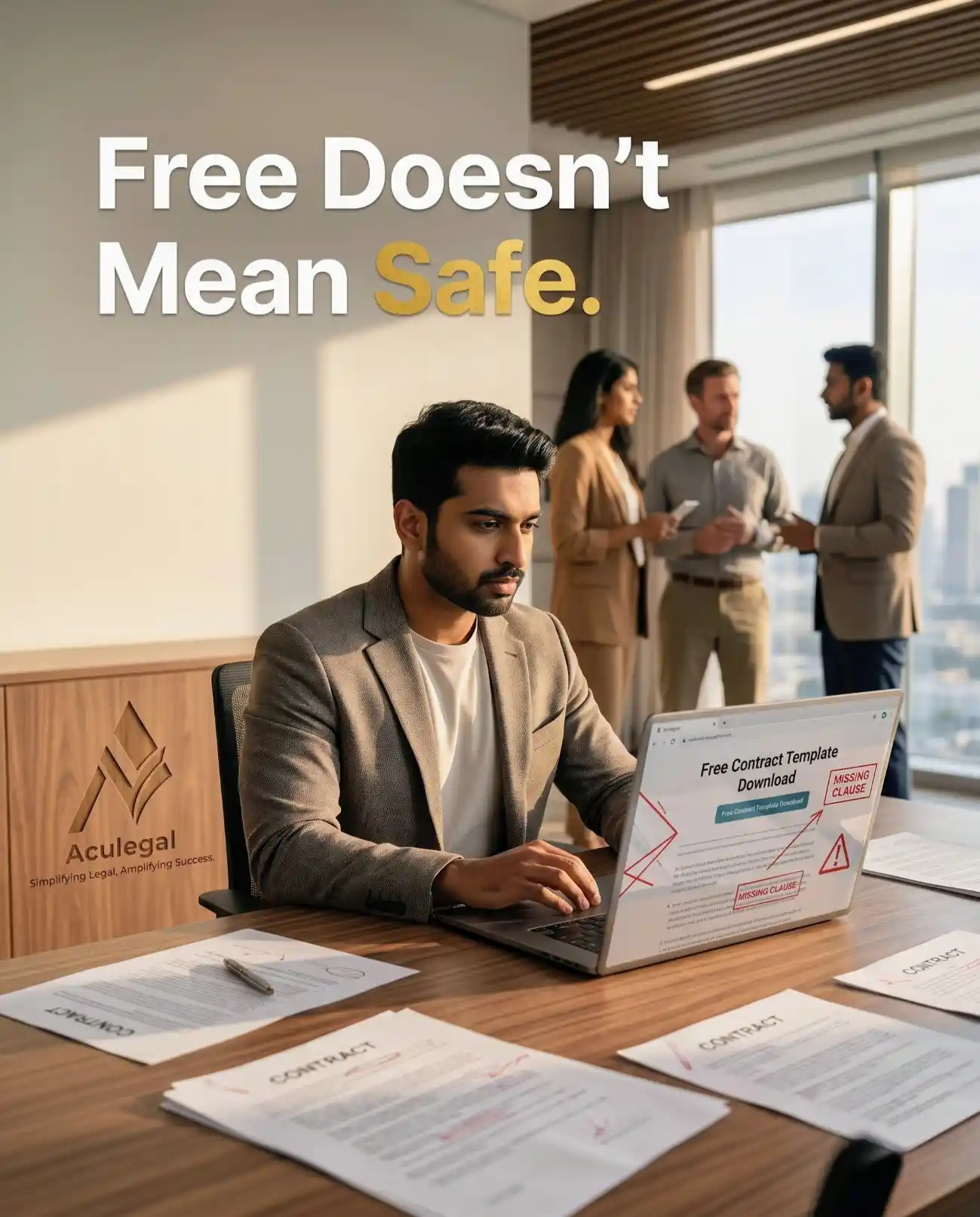
The honest answer: Rarely. And almost never for a growing business.
Free or templated contracts are built for the average case. Your business isn’t average. You have specific revenue models, jurisdiction-specific obligations, unique vendor relationships, and risks that a generic document was never designed to address.
Consider this: approximately 12 million contract lawsuits are filed against small businesses every year, with the average liability suit costing at least $54,000. Most of these disputes stem from ambiguous terms, missing clauses, or agreements that simply weren’t tailored to the actual business relationship.
The legal landscape doesn’t give credit for good intentions. A poorly drafted contract is treated the same as a deliberately bad one.
The Hidden Traps Inside Template Contracts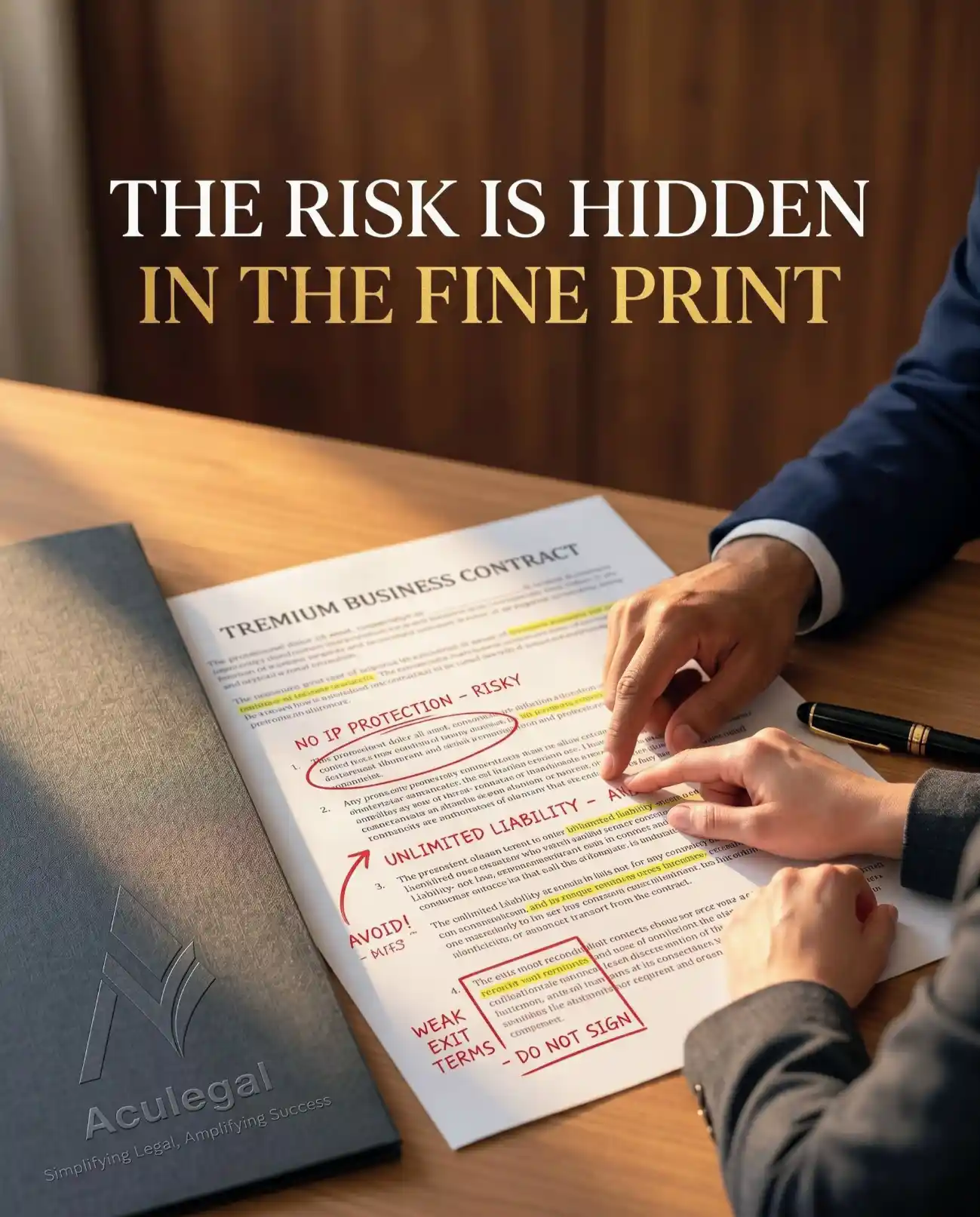
1. They’re Built for a Different Country (or a Different Business)
Most free contract templates are drafted under U.S. or U.K. law. If you’re operating in India, those jurisdictions, limitation periods, dispute resolution clauses, and regulatory references are irrelevant – or worse, actively misleading.
A template that references “at-will employment” or U.S. arbitration rules isn’t just unhelpful for an Indian business. It can create confusion, ambiguity, and unenforceability in Indian courts. Jurisdiction matters. Generic templates ignore it entirely.
2. Critical Clauses Are Missing or Wrong
Standard templates are stripped of clauses that protect your specific business model. What’s missing often matters more than what’s there. Here are some of the most commonly absent or poorly written provisions:
- Intellectual Property (IP) ownership – Who owns the work your freelancer or agency creates for you?
- Payment terms and penalty clauses – What happens when a client delays payment for 90 days?
- Limitation of liability – Are you capped at reasonable exposure, or exposed to unlimited claims?
- Termination and exit conditions – Can either party walk away cleanly, or are you trapped?
- Data protection and confidentiality – Does your NDA actually protect sensitive business information?
Legal experts consistently note that while templates provide a starting point, each business has unique characteristics that require customization. Skipping that customization is not a shortcut. It’s a gamble.
3. Ambiguous Language Creates Disputes – Not Prevents Them
Here’s the irony: a contract is supposed to prevent disputes. A bad contract creates them.
Many online business contract templates are packed with legal jargon – terms like “indemnify,” “joint and several liability,” and “caveat emptor” that most founders can’t confidently interpret. If you don’t understand what a provision means for your business, you cannot predict how it will be enforced against you.
Ambiguous language is the single biggest driver of contract disputes. When two parties walk away from signing with different understandings of the same clause, litigation is almost inevitable.
4. They’re Often Outdated
Laws change. Regulations evolve. Data protection standards like India’s Digital Personal Data Protection Act (DPDPA) introduced new obligations that contracts signed even two years ago don’t address. Using outdated contract templates can expose your business to unenforceable terms and costly disputes – particularly in fast-moving sectors like fintech, SaaS, e-commerce, and healthcare.
A contract that was compliant in 2022 may be non-compliant today. And you wouldn’t know it.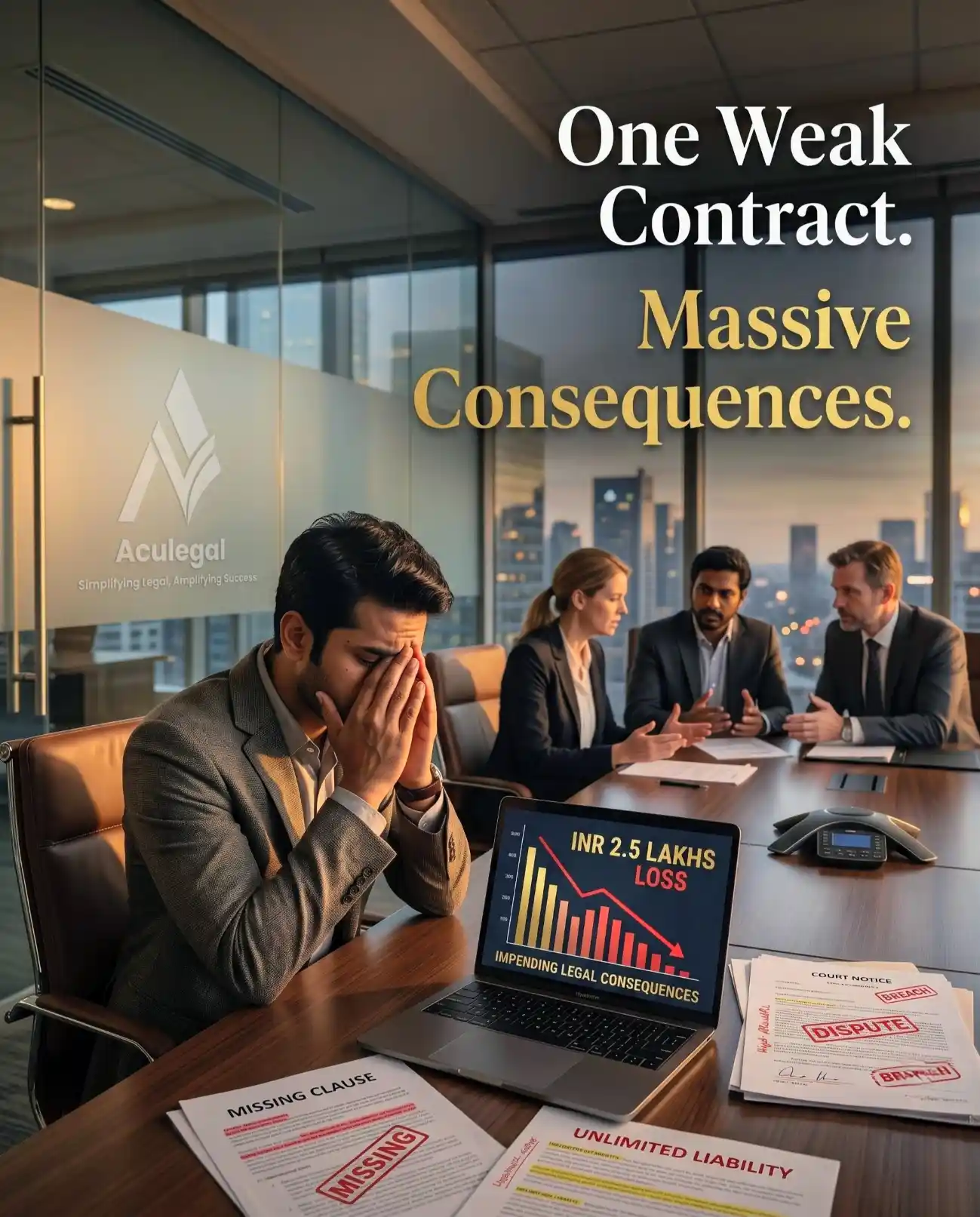
The Real Cost of Getting This Wrong
This isn’t a theoretical risk. It’s a financial reality.
The numbers tell the story clearly:
- Businesses globally spend an estimated $870 billion annually on contract dispute resolution
- Ineffective contract management costs companies an average of 9.2% of their annual revenue
- Resolving a ₹83 lakh (~$100,000) contract dispute can cost approximately ₹10 lakh (~$12,000) in legal fees alone
- Breach of contract cases saw a 15% increase in 2023, with claimants succeeding three times more often when clear, written agreements existed
For a startup or SME, a single contract dispute doesn’t just cost money. It derails operations, damages relationships, kills investor confidence, and consumes founder time that should be spent building the business.
The false economy is stark: you save ₹10,000–₹50,000 on legal drafting. You risk ₹10 lakh+ in litigation.
When Template Contracts Hurt You the Most
During Fundraising and Due Diligence
Investors examine every contract your business has signed. Vague or poorly drafted agreements with co-founders, early employees, contractors, and vendors are immediate red flags. They signal operational immaturity. They slow or kill deals.
Your contracts are a mirror of your business governance. If they’re sloppy, so is the perception of your leadership.
When You’re Scaling Fast
Fast-growing businesses onboard vendors, hire talent, and close clients at pace. Template contracts signed in a rush during a growth sprint often create serious structural problems – worker misclassification, missing IP assignments, payment ambiguities – that become expensive to unwind later.
Rushing contract sign-offs traps founders in one-sided or unclear terms – a one-hour legal review now prevents months of disputes later.
When a Key Business Relationship Breaks Down
Co-founder disputes. A vendor who doesn’t deliver. A client who refuses to pay. A contractor who claims IP ownership. These situations happen in every business. What determines the outcome is almost always the quality of the contract.
A well-drafted contract doesn’t just protect you when things go right. It protects you when things go wrong.
What a Custom Business Contract Actually Does for You
A professionally drafted contract isn’t just legal paperwork. It’s a strategic business tool. Here’s what it delivers:
- Clarity – Both parties understand exactly what is expected, by when, and under what conditions
- Protection – IP, payments, data, and liability are explicitly safeguarded
- Enforceability – Courts can actually uphold your agreement if challenged
- Professionalism – Clients, investors, and partners take your business more seriously
- Scalability – As your business grows, your contracts grow with it – not against it
At Aculegal, we believe legal infrastructure isn’t a cost center. It’s a growth enabler. That’s why our positioning is simple: “Simplifying Legal. Amplifying Success.”
What Aculegal Recommends for Startups and SMEs
Step 1: Conduct a Contract Audit
Before your next funding round, major vendor agreement, or client onboarding, get your existing contracts reviewed. Many businesses are sitting on agreements that expose them to liability they don’t know about.
Step 2: Use Jurisdiction-Specific, Business-Specific Drafting
Every contract your business signs should be drafted or reviewed by a legal professional who understands Indian law, your industry, and your specific risk profile. Not the law of a country you don’t operate in.
Step 3: Build a Legal Foundation Before You Need It
The best time to fix your contracts is before a dispute arises. Proactive legal work is always cheaper than reactive litigation. Whether it’s co-founder agreements, vendor contracts, client MSAs, or employment agreements – get them right the first time.
The Bottom Line: Template Contracts Are a Silent Business Risk
Template contracts are dangerous for growing businesses not because they’re always completely wrong, but because they create a false sense of legal protection. You think you’re covered. You’re not.
A contract built for everyone protects no one specifically.
Founders and SME owners who invest in proper legal drafting early don’t just avoid disputes. They build credibility, close deals faster, attract better partners, and scale with confidence. Legal clarity is competitive advantage.
At Aculegal, we work with founders, startups, and growing businesses to turn legal complexity into business clarity. We draft, review, and structure contracts that actually protect your interests in plain language, with precision, and built for the way your business actually operates.
Ready to Protect Your Business the Right Way?
Stop relying on templates that weren’t built for you. Book a free consultation with Aculegal today and let our team review your existing contracts — or draft new ones that give your business the legal foundation it deserves.
📞 +91 9681232386 | 🌐 Website | 📋 Book a Free Consultation
Simplifying Legal. Amplifying Success.
Sources: