

Introduction
Every business deal begins with excitement — a signed contract, a handshake, and big plans. Yet, for too many companies, that same document quietly becomes the spark that ignites costly disputes, drained resources, and damaged relationships.
Contract disputes account for approximately 65% of all commercial litigation cases. In India, poor contract management and delays in performance top the list of triggers, according to industry surveys. The numbers are clear: most business fights don’t start in courtrooms or boardrooms — they start in the fine print you overlooked.
At Aculegal, we see it every day. Businesses in India, across cities, lose millions not because of bad partners, but because of preventable contract weaknesses. This blog uncovers exactly why disputes explode from contracts and shows you how to stop them cold.
This article explores why most business disputes originate in contracts and how businesses can prevent these risks through strategic legal structuring.
The Statistics Don’t Lie: Contracts Fuel Most Business Conflicts
Contract-related issues dominate business litigation worldwide and in India. Studies show they make up nearly half of civil filings in many courts. In our commercial landscape, the Commercial Courts Act, 2015, was created precisely because contract disputes clog the system.
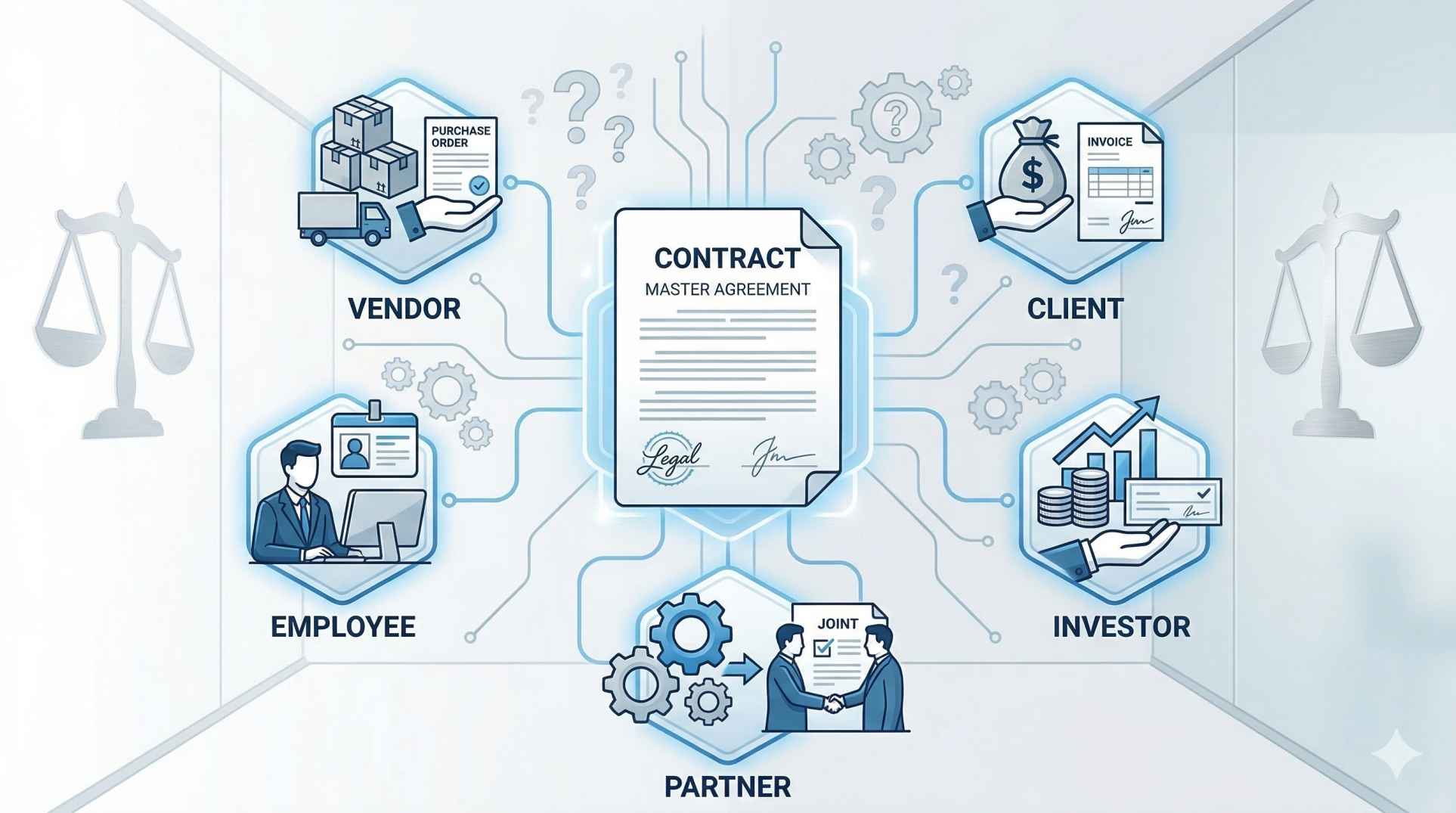
Why so common? Contracts govern every deal — suppliers, clients, employees, partners. One weak clause and the entire relationship unravels. Indian businesses report that 95% feel they leave money on the table during negotiations, with post-signing value leakage averaging 9%.
The result? Delayed projects, unpaid invoices, and court battles that drag on for years.
Short paragraphs like these make the truth hit harder: your contract isn’t just paperwork, it’s your business shield or your hidden landmine.
Root Cause #1: Ambiguous Language — The Silent Dispute Starter
Vague words are the #1 killer. Phrases like “reasonable time,” “best efforts,” or “market standard” sound professional but invite different interpretations.
What happens next? One party thinks “delivery in 30 days” means calendar days. The other insists on working days. Suddenly, you’re arguing over definitions instead of growing.
Under the Indian Contract Act, 1872, courts look at the plain meaning of words. Ambiguity often leads to expensive litigation where judges decide what you “meant.”
Real-world impact in India: Supplier contracts in manufacturing frequently collapse over unclear quality specifications. Service agreements with freelancers blow up because “satisfactory performance” was never defined.

Root Cause #2: Missing Critical Clauses That Leave You Exposed
Many contracts are rushed templates missing vital protections. Without them, small issues snowball into full-blown disputes.
Essential clauses that businesses often skip:
- Clear payment schedules and penalties for late payment
- Force majeure provisions for unforeseen events (pandemic lessons still apply)
- Detailed dispute resolution mechanisms (arbitration vs. court)
- Termination rights and exit procedures
- Confidentiality and non-compete protections
- Governing law and jurisdiction (especially for cross-border deals)
In India, the absence of a proper arbitration clause under the Arbitration and Conciliation Act, 1996 forces parties into slow civil courts. One missing indemnity clause can leave you liable for huge third-party claims.
Pro tip: Never use a generic template for anything worth more than ₹5 lakh.
Root Cause #3: Failure to Perform Obligations — The Classic Breach
Even clear contracts fail when one party doesn’t deliver. Late deliveries, substandard work, or missed payments top the list of breaches.
Section 37 of the Indian Contract Act makes timely performance mandatory. Yet surveys show “delay in performance” as the most cited cause of commercial disputes in India.
Why does this happen?
- Unrealistic deadlines set during negotiations
- No monitoring mechanisms
- Changing business priorities without formal amendments
Consequence: The aggrieved party can claim damages under Section 73, but proving actual loss in court is time-consuming and expensive.
Root Cause #4: Unforeseen Circumstances and Poor Risk Allocation
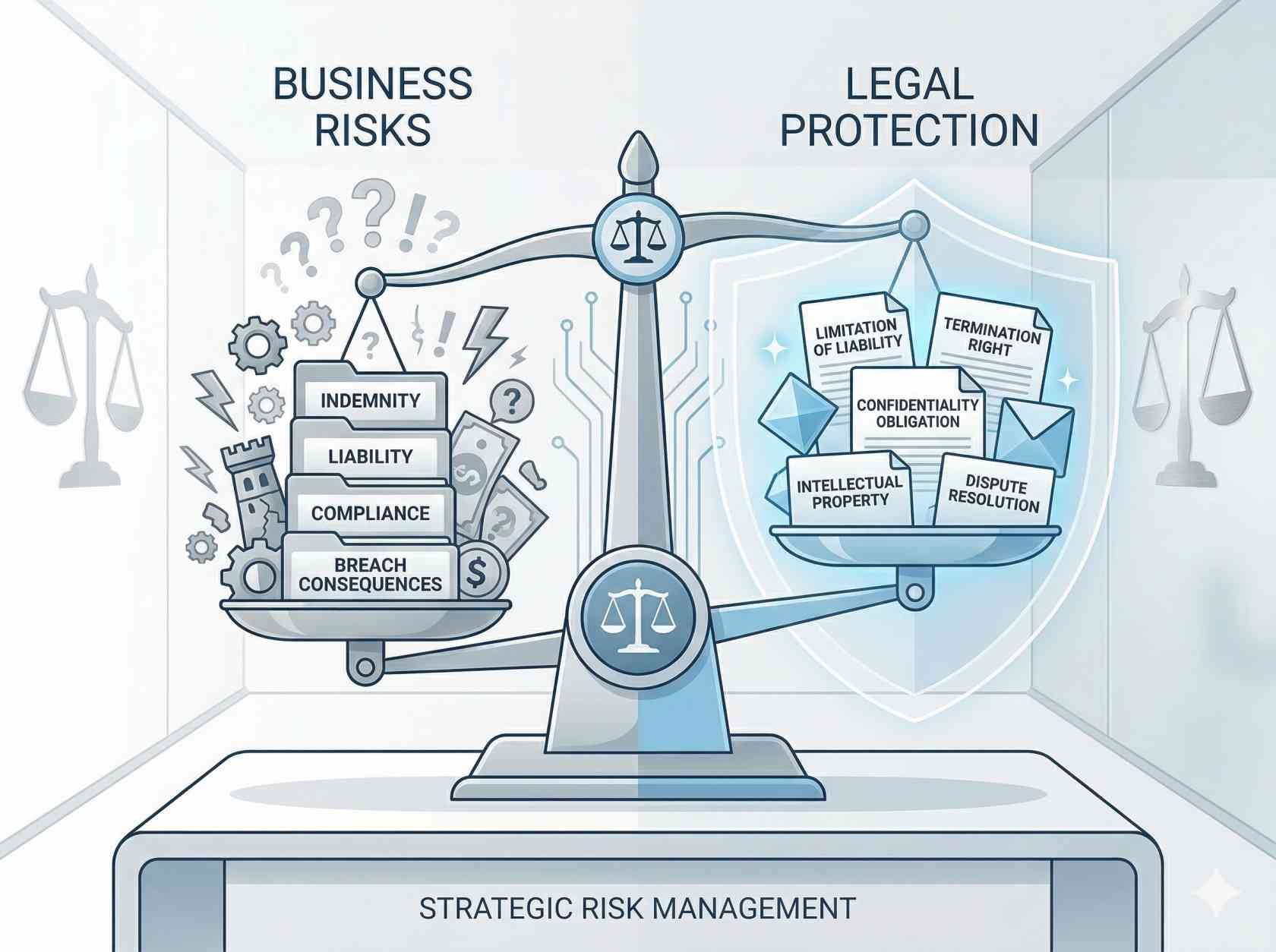
Markets shift. Regulations change. Supply chains break. Contracts that ignore these realities create instant disputes.
The COVID-19 era exposed thousands of Indian contracts lacking robust force majeure clauses. Today, inflation, new GST rules, or export restrictions trigger similar fights.
Common gaps:
- No price escalation clauses in long-term supply agreements
- No change-in-law provisions
- No clear responsibility for regulatory compliance
Businesses that allocate risk fairly upfront avoid 80% of these battles.
India-Specific Challenges: Why Disputes Hit Harder Here
India’s legal system adds unique pressure. While the Commercial Courts Act speeds up cases above ₹3 lakh, average resolution still takes 1–3 years.
Key Indian realities:
- Strict enforcement under the Indian Contract Act, 1872
- Growing use of arbitration for faster outcomes
- High stakes in sectors like IT, manufacturing, real estate, and startups (think OYO revenue-sharing rows or supplier payment delays)
Poor contract drafting also leads to regulatory fines and compliance headaches. The result? Businesses lose not just money but momentum.
The Real Cost of Contract Disputes Is Beyond Legal Fees
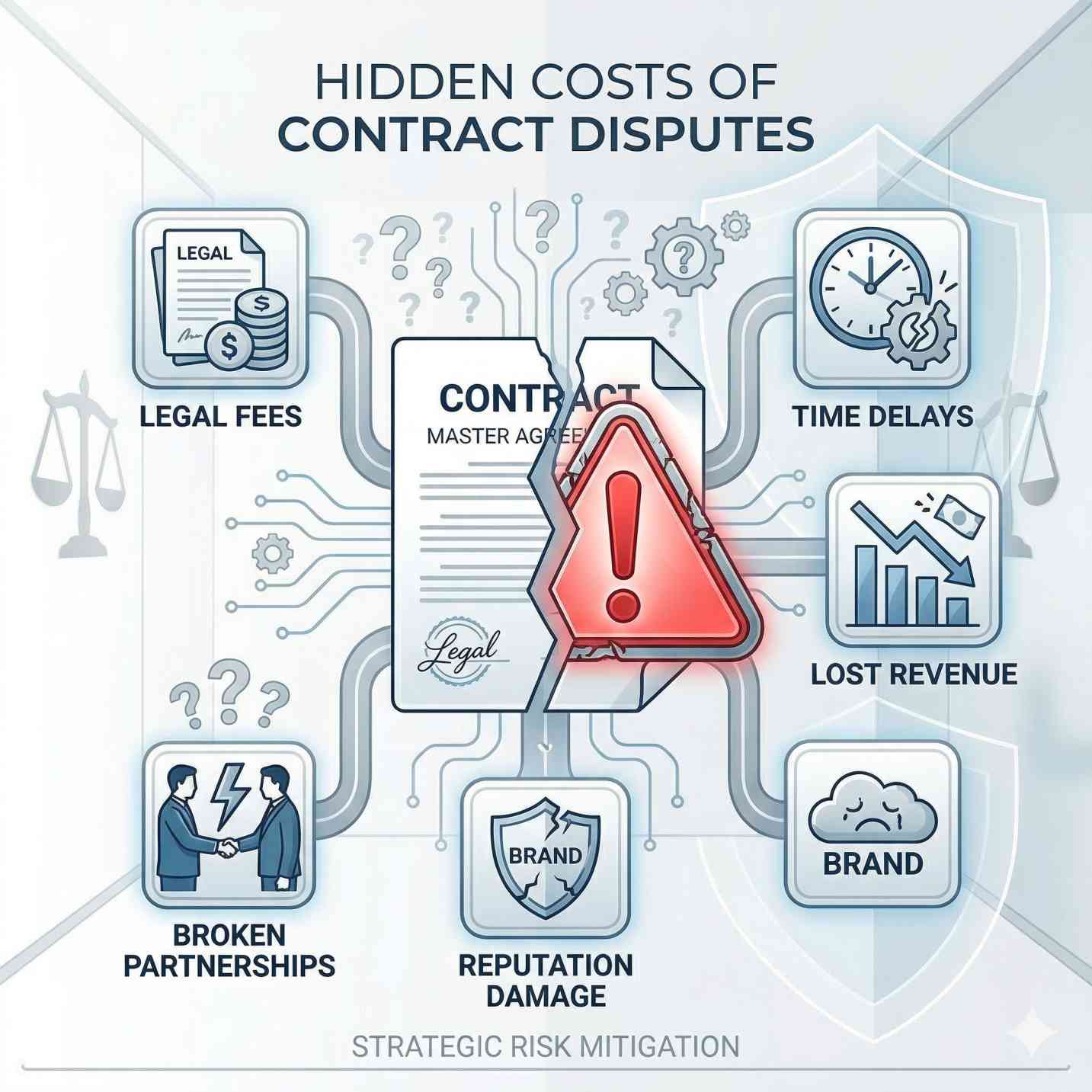
Don’t think “we’ll just settle.” The hidden costs destroy businesses:
- Financial drain: Legal fees, damages, and lost revenue
- Time theft: Months or years diverted from growth
- Reputation damage: Public disputes scare clients and investors
- Opportunity loss: Deals stall while you fight
- Relationship breakdown: Once-trusted partners become enemies
In India, one bad contract dispute can wipe out an entire year’s profit for SMEs.
Bulletproof Your Contracts: 7 Proven Prevention Strategies
Prevention beats cure every time. Follow these steps and watch disputes plummet:
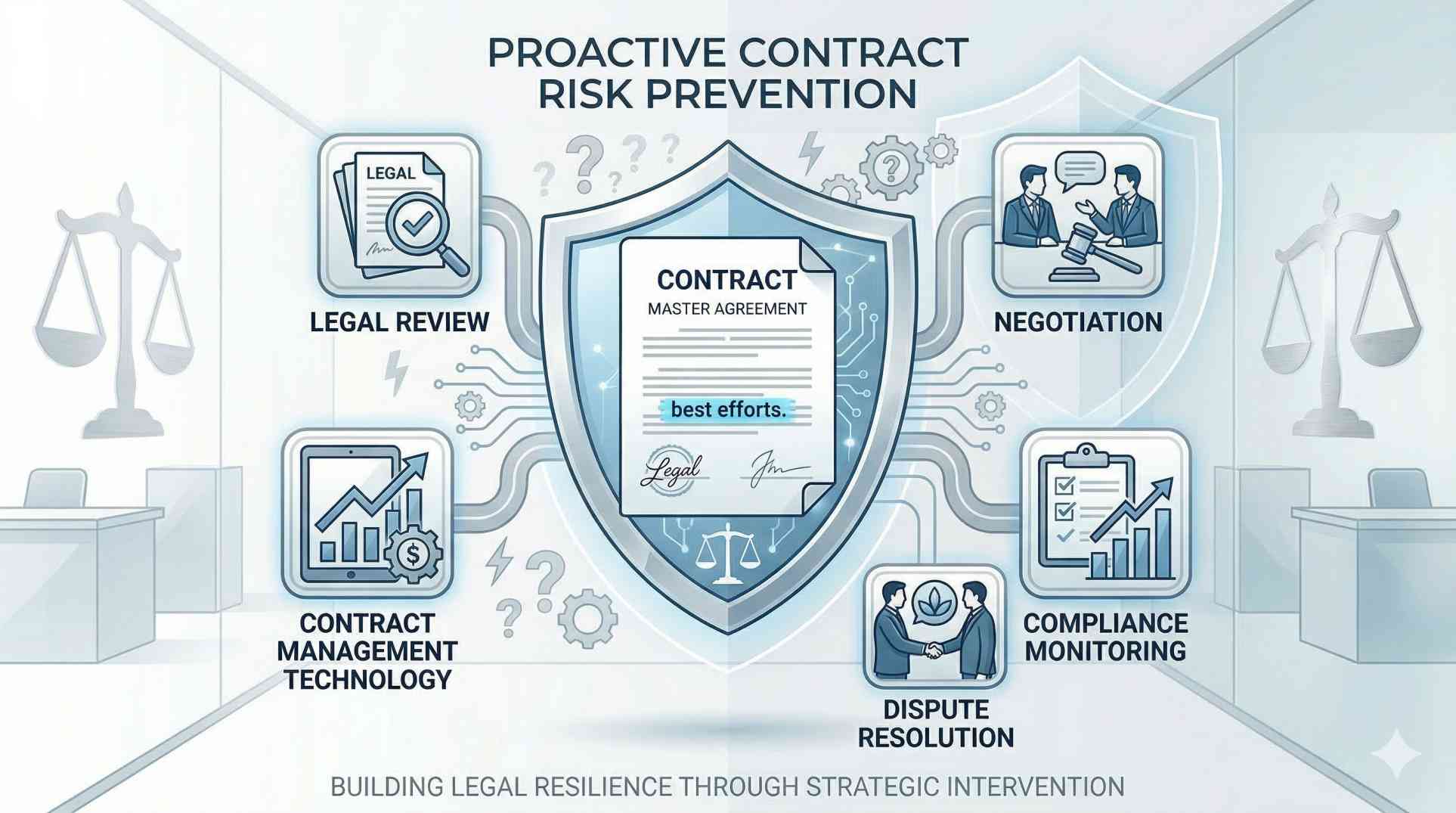
- Always involve legal experts early — Never let business teams finalise terms alone.
- Use plain, precise language — Define every key term in a dedicated section.
- Include comprehensive dispute resolution clauses — Prefer arbitration for speed and confidentiality.
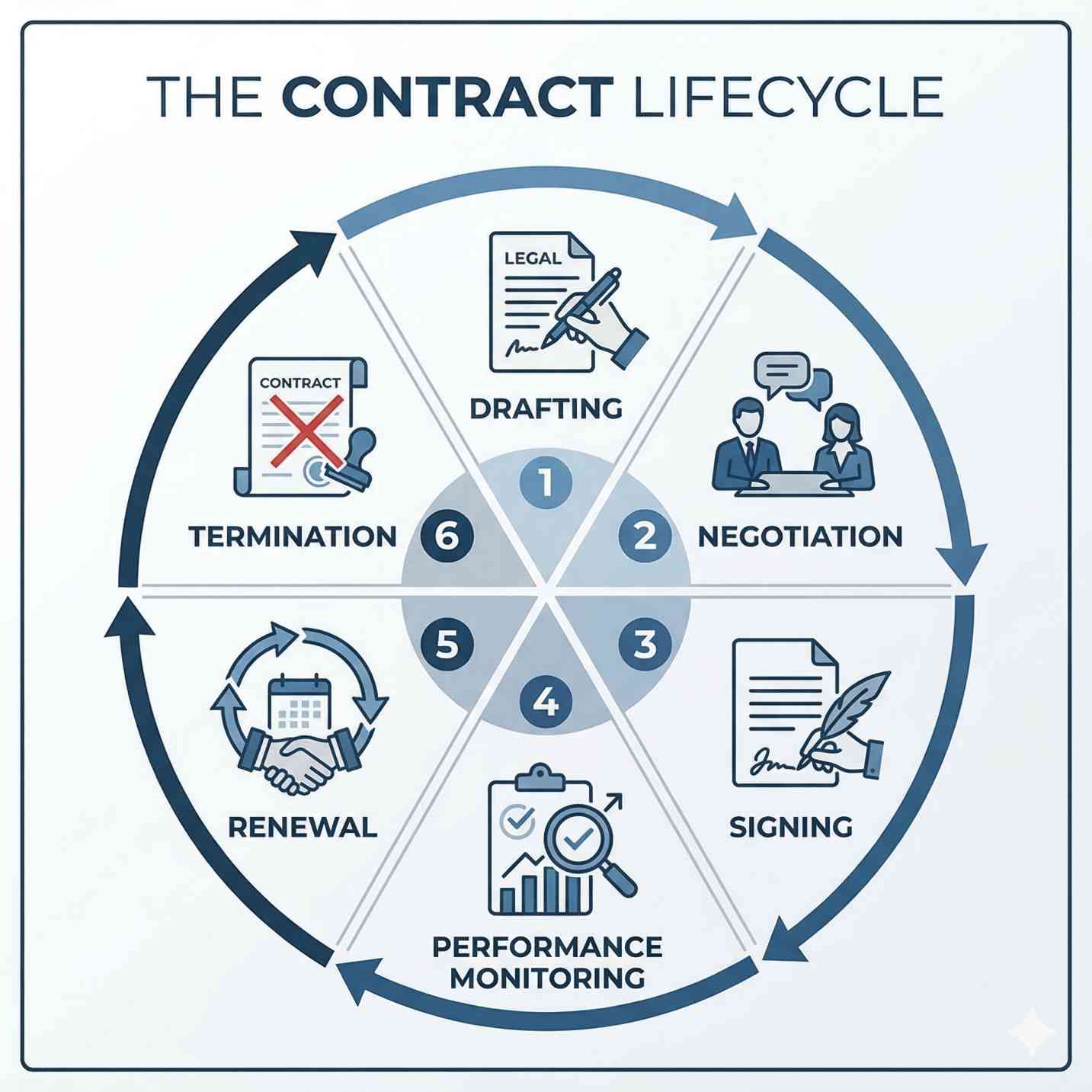
- Build in regular review mechanisms — Schedule annual contract health checks.
- Document everything — Emails, amendments, and performance records must align with the contract.
- Test scenarios — Ask “what if” for every clause before signing.
- Leverage technology — Contract management software flags risks automatically.
Bonus: Conduct a full contract audit every 12 months. At Aculegal, we’ve helped clients reduce dispute risk by over 70% through proactive reviews.
When Disputes Do Arise: Smart Resolution Paths in India
Even strong contracts face issues. Choose wisely:
- Negotiation — Fastest and cheapest
- Mediation — Preserves relationships
- Arbitration — Binding, private, and quicker than courts
- Litigation — Last resort under the Commercial Courts
Pro move: Build escalation steps into every contract so you control the process instead of the courts deciding.
Conclusion: Turn Your Contracts from Risk to Rocket Fuel
Most business disputes start in contracts because of ambiguity, missing clauses, poor performance terms, and ignored risks. In India, delays and regulatory gaps make the problem even costlier.
Yet the solution is straightforward: treat contracts as living business assets, not afterthoughts. Draft clearly. Review regularly. Allocate risk fairly. Resolve smartly.
Your next deal doesn’t have to become your next dispute.
Ready to make your contracts dispute-proof?
At Aculegal, we specialise in end-to-end contract management — from smart drafting and airtight reviews to compliance and dispute resolution. Our Kolkata-based team has helped hundreds of businesses across India close deals faster, reduce risks, and grow without legal landmines.
Don’t wait for the next dispute to hit.
Schedule your free Contract Risk Assessment today.
Call us or visit aculegal.com to book a no-obligation consultation.
Protect your business. Amplify your success.
Aculegal- Simplifying Legal, Amplifying Success.