
Introduction
Most business disputes do not begin in courtrooms. They start quietly inside contracts, compliance records, operational decisions, and overlooked legal obligations.
A missing clause, an outdated policy, or a compliance oversight may appear insignificant at first. However, when disagreements arise between partners, vendors, regulators, or employees, these small gaps can quickly evolve into serious legal conflicts.
For many companies, legal action is the first moment they realize that their internal legal structure was never fully prepared to handle risk.
This is where legal audits become an essential part of modern business strategy.
A legal audit is not simply about checking documents. It is a preventive legal mechanism designed to identify vulnerabilities before they turn into disputes, penalties, or litigation.
Companies that conduct structured legal audits regularly are far better equipped to protect their operations, reputation, and financial stability.
In this article, we explore how legal audits work, why they are essential for modern organizations, and how they help companies avoid costly disputes before they arise.
What Is a Legal Audit?
A Preventive Legal Health Check for Businesses
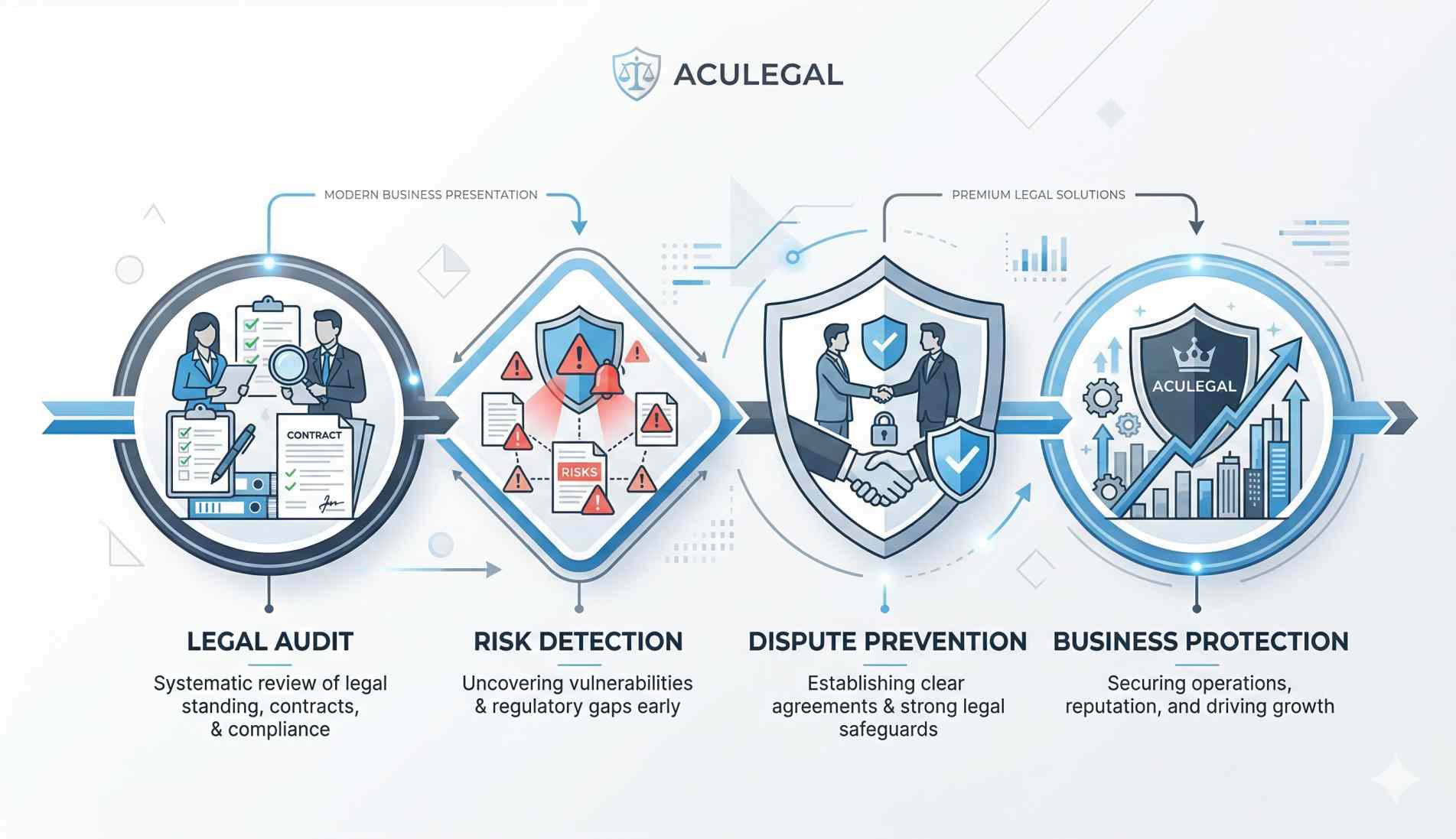
A legal audit is a systematic review of a company’s legal structure, policies, contracts, and compliance practices.
The purpose is to identify:
- Legal risks
- Compliance gaps
- Weak contractual protections
- Governance issues
- Operational vulnerabilities
Instead of waiting for disputes to occur, a legal audit evaluates whether the company’s legal framework is strong enough to withstand potential conflicts.
Think of a legal audit as a legal health check for the organization.
Just as financial audits ensure financial accuracy, legal audits ensure that the business is legally protected and compliant with applicable laws.

Why Businesses Face Legal Disputes
The Hidden Causes of Corporate Conflicts
Many organizations assume that legal disputes arise only from major misconduct or intentional wrongdoing.
In reality, most disputes originate from structural weaknesses in business documentation and processes.
Common causes include:
- Ambiguous contract terms
- Missing liability limitations
- Weak dispute resolution clauses
- Unclear vendor obligations
- Non-compliance with regulatory requirements
- Improper documentation of corporate decisions
These issues often remain unnoticed until a disagreement arises. At that point, the company may discover that its legal protections are insufficient.
By the time litigation begins, correcting these weaknesses becomes far more expensive and complex.
Why Businesses Face Legal Disputes
The Hidden Causes of Corporate Conflicts
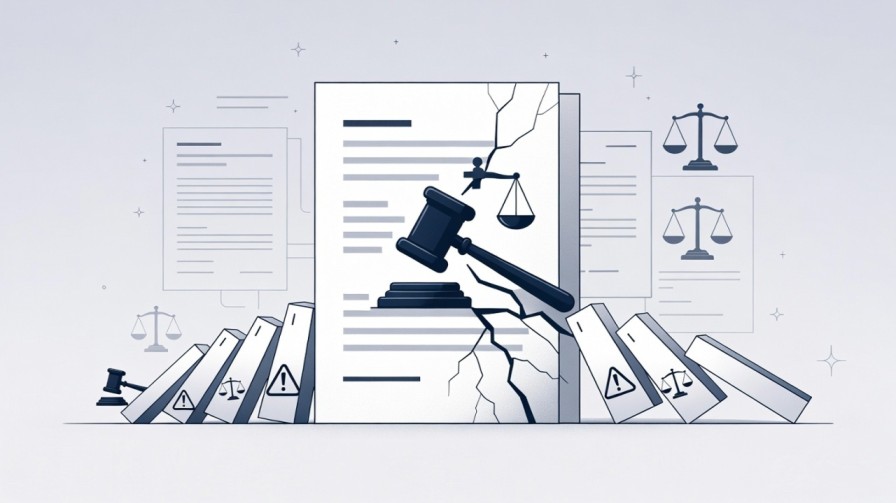
Many organizations assume that legal disputes arise only from major misconduct or intentional wrongdoing.
In reality, most disputes originate from structural weaknesses in business documentation and processes.
Common causes include:
- Ambiguous contract terms
- Missing liability limitations
- Weak dispute resolution clauses
- Unclear vendor obligations
- Non-compliance with regulatory requirements
- Improper documentation of corporate decisions
These issues often remain unnoticed until a disagreement arises. At that point, the company may discover that its legal protections are insufficient.
By the time litigation begins, correcting these weaknesses becomes far more expensive and complex.
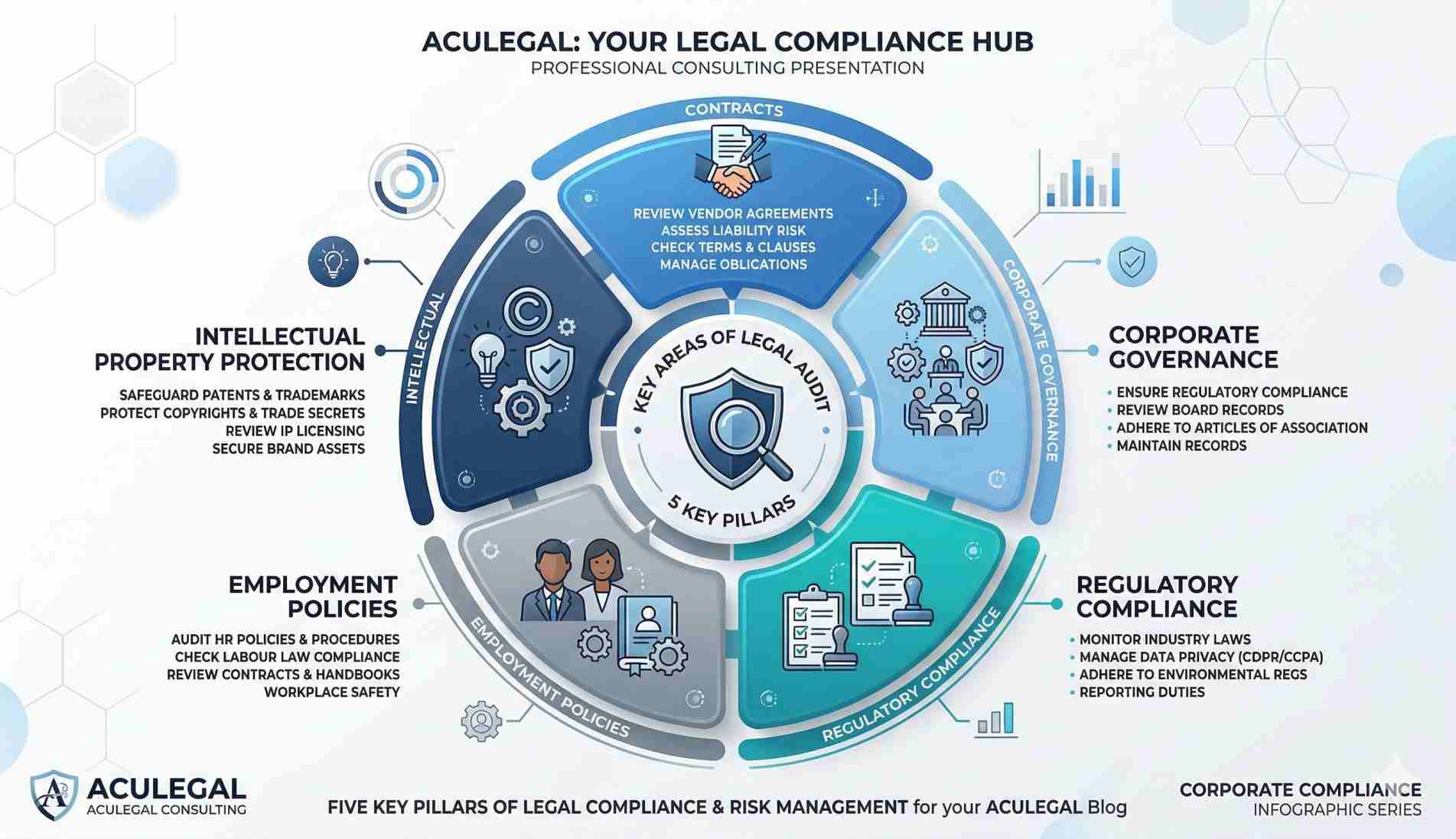
Key Areas Reviewed During a Legal Audit
1. Contracts and Commercial Agreements
Contracts form the foundation of most business relationships.
However, poorly drafted agreements are one of the most common sources of disputes.
Legal audits examine whether contracts include essential protections such as:
- Clear roles and responsibilities
- Termination rights
- Dispute resolution mechanisms
- Jurisdiction clauses
- Indemnity provisions
- Liability limitations
If contracts lack these safeguards, companies may face significant challenges when disagreements occur.
Strengthening contractual language during a legal audit significantly reduces litigation risk.
2. Corporate Governance and Documentation
Corporate governance ensures that the organization operates according to legal and regulatory standards.
Many companies fail to maintain proper governance documentation.
A legal audit reviews:
- Board resolutions
- Shareholder agreements
- Director responsibilities
- Statutory filings
- Corporate records
Proper governance structures help prevent internal disputes between shareholders, directors, and management.
They also demonstrate legal credibility to regulators and investors.
3. Regulatory Compliance
Every business operates within a complex web of regulations.
Failure to comply with these requirements can lead to:
- Regulatory penalties
- Operational restrictions
- Government investigations
- Reputational damage
A legal audit evaluates whether the company is meeting all applicable statutory and regulatory obligations.
This may include compliance related to:
- Corporate law
- Labour regulations
- Tax obligations
- Data protection
- Industry-specific regulations
Ensuring regulatory compliance significantly reduces the risk of government action against the company.
4. Employment and Workplace Policies
Employment disputes are among the most common legal challenges faced by businesses.
These disputes often arise from unclear policies or inconsistent practices.
A legal audit evaluates:
- Employment contracts
- Workplace conduct policies
- Termination procedures
- Disciplinary frameworks
- Compliance with labour laws
Well-drafted employment policies protect both the organization and its employees, creating a transparent and fair workplace structure.
5. Intellectual Property Protection
For many companies, intellectual property is one of their most valuable assets.
However, businesses frequently overlook proper legal protection for their innovations.
Legal audits assess whether the organization has adequately protected:
- Trademarks
- Copyrights
- Confidential information
- Proprietary technology
- Licensing agreements
Protecting intellectual property ensures that the company maintains exclusive control over its innovations and brand identity.
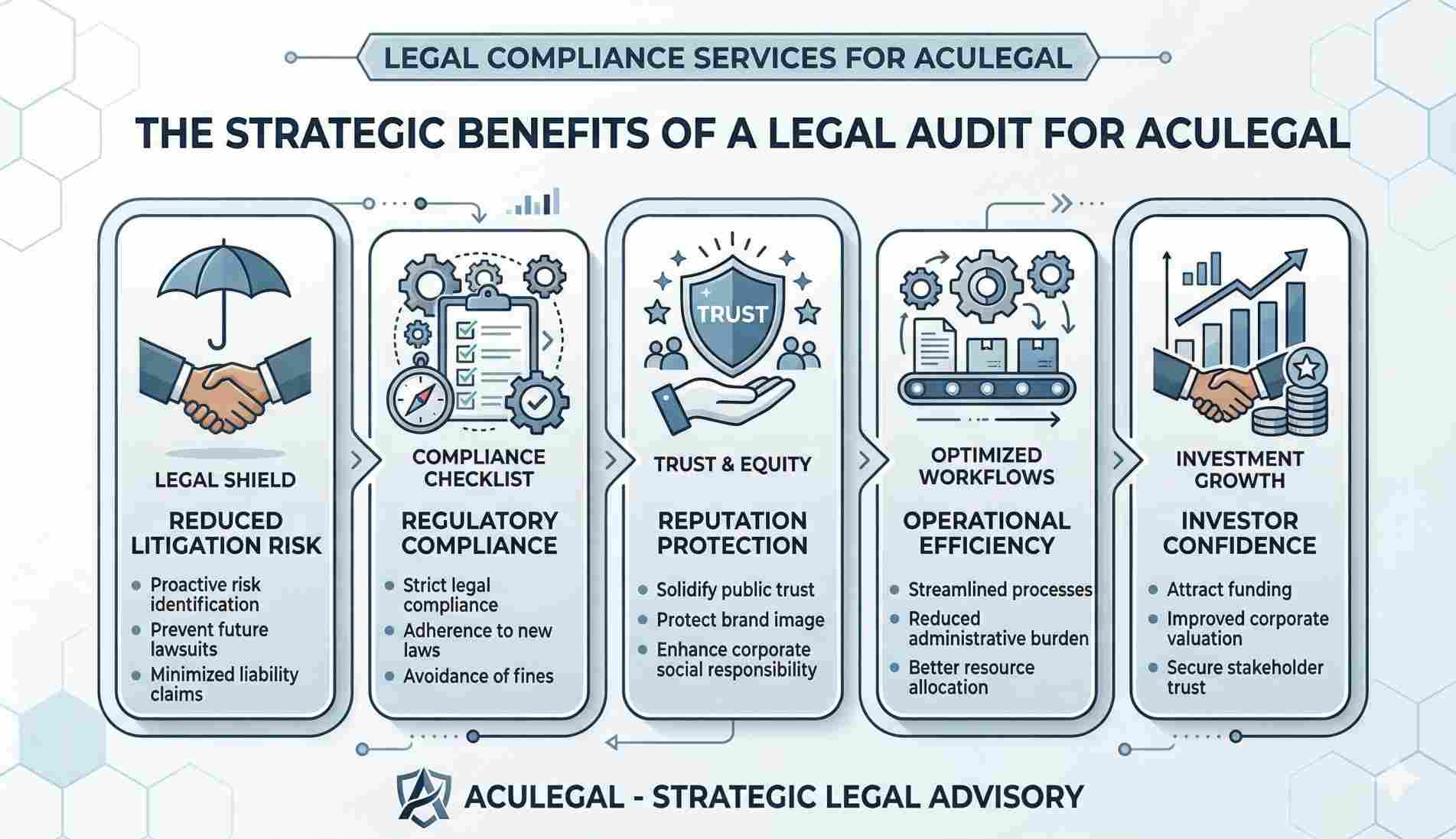
Benefits of Conducting Legal Audits
1. Preventing Costly Litigation
Litigation can consume significant time, money, and managerial attention.
Legal audits reduce the likelihood of disputes by strengthening contracts, policies, and compliance structures.
Preventing a dispute is almost always far less expensive than resolving one in court.
2. Enhancing Business Stability
A strong legal structure creates stability within the organization.
When governance systems, compliance frameworks, and contracts are clearly defined, business operations become more predictable and secure.
This stability allows leaders to focus on strategic growth instead of risk management.
3. Protecting Corporate Reputation
Legal disputes often attract public attention.
Negative publicity can damage relationships with customers, investors, and business partners.
By identifying and resolving legal vulnerabilities early, companies can protect their brand reputation and market credibility.
4. Improving Operational Efficiency
Legal audits often reveal inefficiencies in internal processes.
For example:
- Duplicate documentation
- Inconsistent contract management
- Lack of standardized approval procedures
Addressing these issues not only improves legal protection but also enhances operational efficiency.
5. Building Investor and Partner Confidence
Investors and business partners evaluate legal risk before entering into relationships with companies.
Organizations that maintain structured legal frameworks demonstrate:
- Professional governance
- Strong risk management
- Long-term reliability
This can significantly improve opportunities for investment, partnerships, and strategic collaborations.
When Should Companies Conduct Legal Audits?
Many businesses conduct legal reviews only after a problem has occurred.
However, the most effective legal audits are conducted proactively.
Companies should consider legal audits during key moments such as:
- Business expansion into new markets
- Rapid organizational growth
- Mergers or acquisitions
- Regulatory changes
- Investment or funding rounds
- Major operational restructuring
Regular legal audits ensure that the company’s legal framework evolves alongside its business growth and changing regulatory environment.
Legal Audits as a Preventive Business Strategy
Moving From Reactive Law to Strategic Legal Management
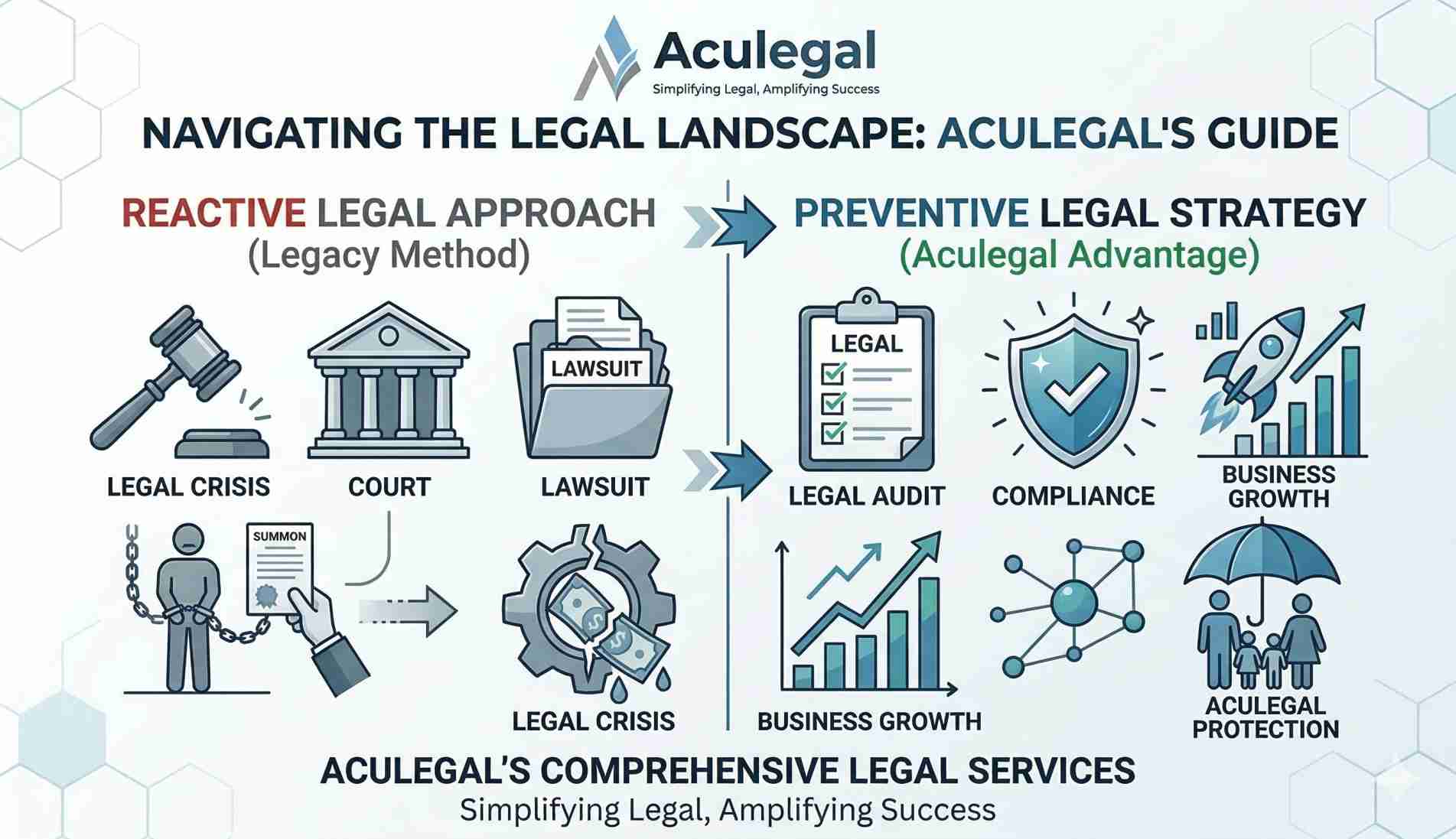
Traditionally, businesses engage legal professionals only when a dispute arises.
This reactive approach treats legal services as a problem-solving function.
However, forward-thinking companies now view legal functions differently.
They treat legal strategy as a core component of business risk management.
Legal audits play a crucial role in this preventive approach.
By identifying vulnerabilities early, organizations can strengthen their legal infrastructure before risks escalate.
This approach transforms legal functions from a reactive necessity into a strategic asset that supports business growth.
How Aculegal Supports Businesses Through Legal Audits
At Aculegal, we believe that the best legal dispute is the one that never happens.
Our legal advisory framework focuses on preventive legal protection.
Through structured legal audits, we help companies:
- Identify hidden legal risks
- Strengthen contracts and documentation
- Improve compliance systems
- Build strong governance frameworks
- Reduce future litigation exposure
Our approach combines legal expertise with strategic business insight, ensuring that legal systems support business growth rather than restrict it.
By addressing vulnerabilities early, organizations can protect their operations, reputation, and long-term success.
Conclusion
Legal disputes rarely emerge suddenly. They usually develop from small legal weaknesses that accumulate over time.
Unclear contracts, weak compliance systems, and incomplete documentation can eventually lead to serious legal conflicts.
Legal audits provide a structured method to identify and resolve these issues before they escalate.
By reviewing contracts, governance structures, compliance practices, and operational processes, companies can strengthen their legal foundations and significantly reduce risk exposure.
In today’s complex business environment, preventive legal strategies are no longer optional.
Organizations that invest in legal audits build stronger, more resilient, and more sustainable businesses.

Is your company prepared to handle future legal risks?
A structured legal audit can reveal hidden vulnerabilities before they turn into costly disputes.
Aculegal’s Legal Health Assessment helps businesses:
- Identify critical legal risks
- Strengthen contracts and governance structures
- Ensure regulatory compliance
- Build a preventive legal framework
Protect your business before disputes arise.
Schedule your Legal Health Assessment with Aculegal today and transform legal protection into a strategic advantage.