

Introduction
IFSC share capital rules for foreign capital raising just got a significant upgrade, and if you’re a founder, startup, or SME with any cross-border ambitions, you can’t afford to miss what’s changed.
India’s GIFT City International Financial Services Centre (IFSC) has quietly become one of the most strategically powerful financial jurisdictions for businesses looking to raise global capital. But most founders are still playing by the old rules — or worse, routing capital through expensive offshore structures in Singapore or Mauritius because they don’t know there’s a faster, cheaper, and fully compliant path right here in India.
The IFSCA (International Financial Services Centres Authority) has approved a sweeping set of capital-raising frameworks in 2025–2026. These aren’t incremental tweaks. They represent a fundamental shift in how IFSC-listed entities can access foreign capital, and the window for early movers is wide open.
This article breaks down what changed, why it matters, and what you need to do now.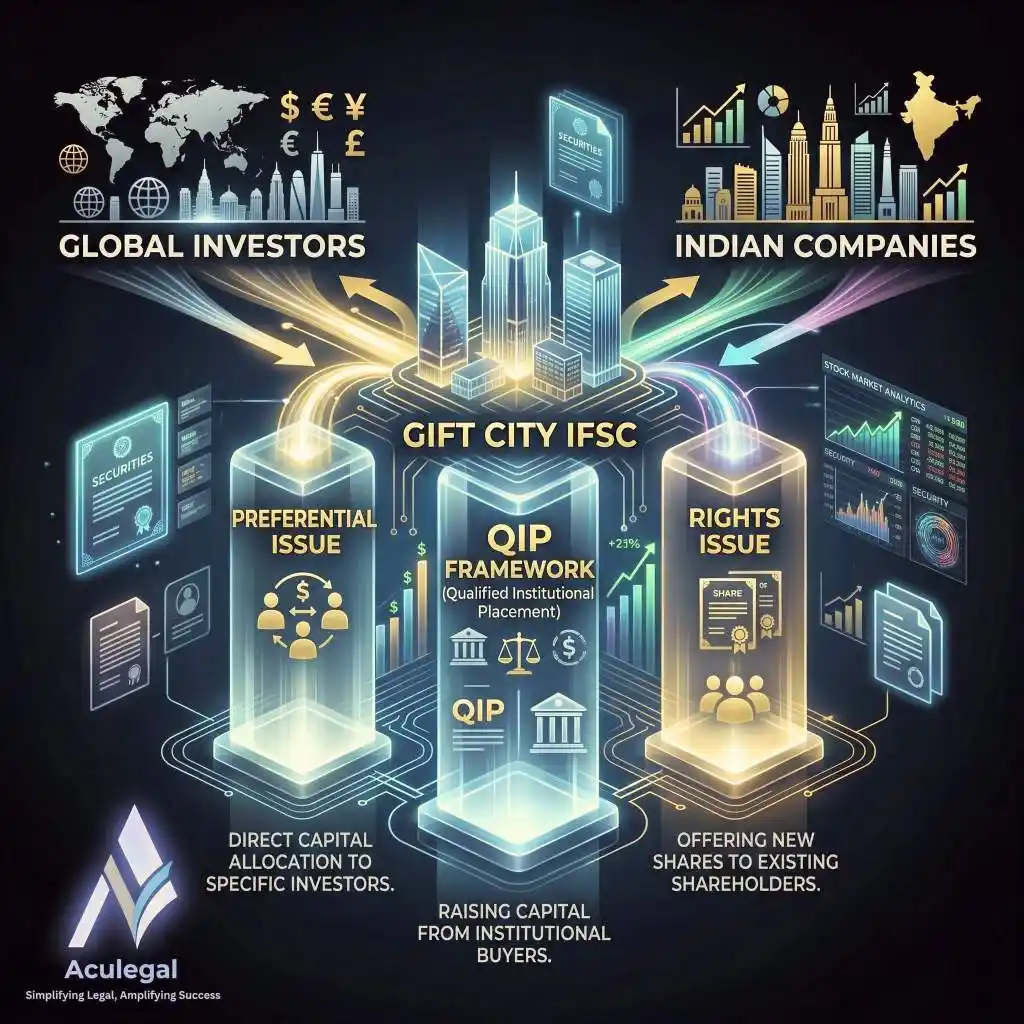
How the New IFSC Share Capital Rules Change Foreign Investment in India
For years, GIFT City held enormous promise but lacked the capital markets infrastructure to deliver it. That’s no longer true.
The IFSCA, in its 28th Authority Meeting (April 17, 2026), formally approved three landmark frameworks that transform GIFT IFSC into a serious global capital-raising destination:
- Preferential Issues and Qualified Institutions Placement (QIP) Framework
- Rights Issue Framework
- SPV and TCSP structures for leasing and aviation finance
Together, these frameworks plug the most critical gaps that had held back institutional foreign investment from flowing freely into IFSC-domiciled entities.
What Is the Preferential Issue and QIP Framework, and Why Does It Matter?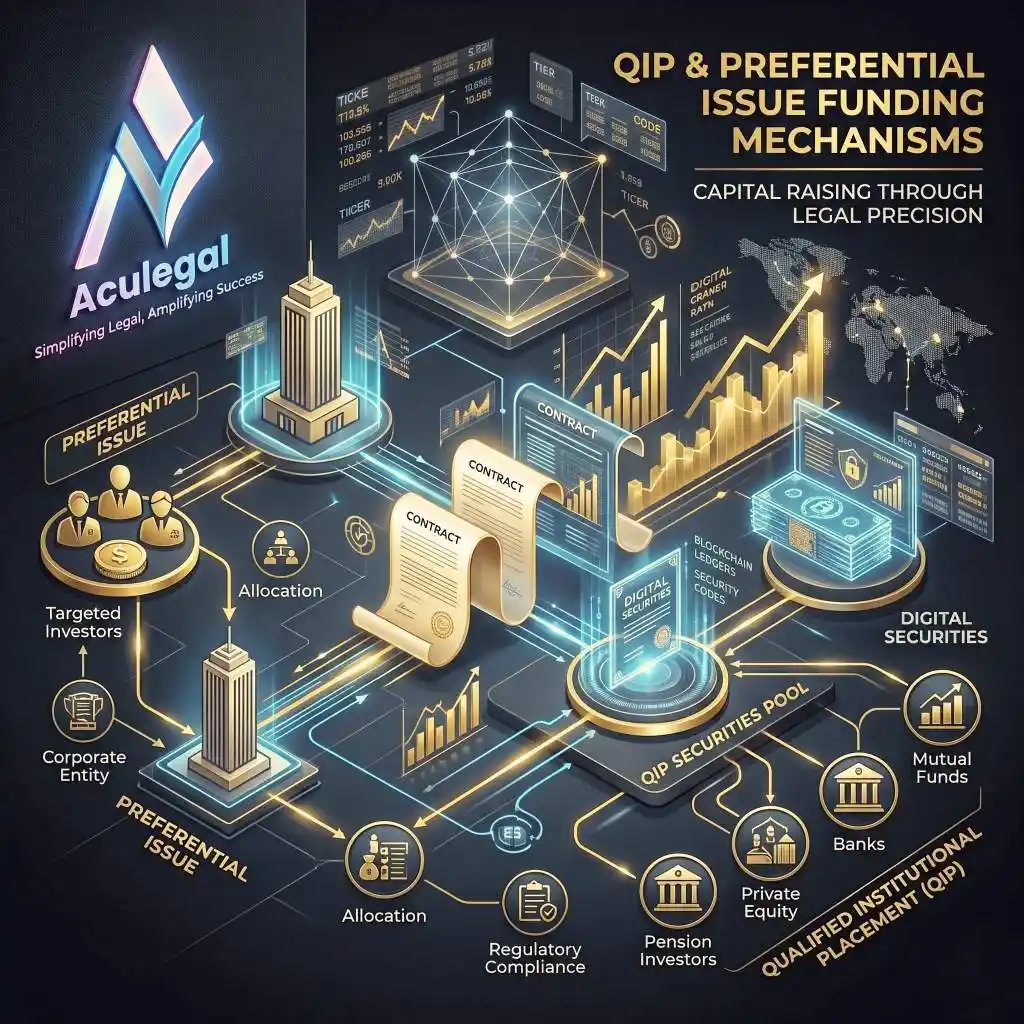
Previously, companies listed on IFSC exchanges had limited mechanisms to raise additional capital post-listing. The new Preferential Issue and QIP framework under the IFSCA (Listing) Regulations, 2024 changes that entirely.
Under the Preferential Issue mechanism, listed entities at GIFT IFSC can now allot equity shares, convertible instruments, or warrants to a specifically identified set of investors. This is the instrument of choice when you want to bring in a strategic investor quickly at a negotiated price that reflects commercial reality, not bureaucratic red tape.
Under the QIP route, companies can raise capital from Qualified Institutional Buyers (QIBs), think global pension funds, sovereign wealth funds, and institutional asset managers, without the full public offer process. This dramatically reduces time-to-capital for companies that have already demonstrated market credibility.
Key conditions you need to know:
- The issuer must not have any outstanding dues payable to IFSCA or the relevant stock exchanges
- Allotment must be completed within one year from the date of passing the special resolution
- The preferential issue or QIP cannot be made to any person who has sold or transferred equity shares of the issuer in the 30 trading days preceding the relevant date
- Issuers must appoint registered investment bankers, ensure due diligence, and issue placement documents
This is not a loophole. It is a structured, compliance-grade mechanism designed to make GIFT IFSC as competitive as Hong Kong, Singapore, and Dubai for institutional fundraises.
The Rights Issue Fast-Track: Capital from Your Existing Investors, Simplified
The second major framework approved is the Rights Issue mechanism under the IFSCA (Listing) Regulations, 2024. For founders and promoters, this is significant.
A rights issue lets you raise fresh capital from your existing shareholders, giving them the right to subscribe to new shares proportional to their current holding. It’s the cleanest way to raise capital without diluting your investor base or onboarding new parties.
What makes the IFSC version particularly powerful is the fast-track, streamlined process that IFSCA has designed for it. Compared to a full public offer, the documentary and regulatory requirements are substantially reduced for eligible listed entities.
For Indian public companies that have already listed on GIFT IFSC exchanges (India INX or NSE IFSC), this creates a powerful recurring capital mechanism, one that can be activated quickly when growth opportunities arise and timing is critical.
The rules around eligibility, pricing, and disclosure are calibrated to global best practices. For issuers with a proposed issue size of USD 100 million or less, there is even an exemption from seeking an observation letter from IFSCA, further reducing administrative burden.
Direct Listing at GIFT City: Raising Foreign Capital Without a Domestic Listing First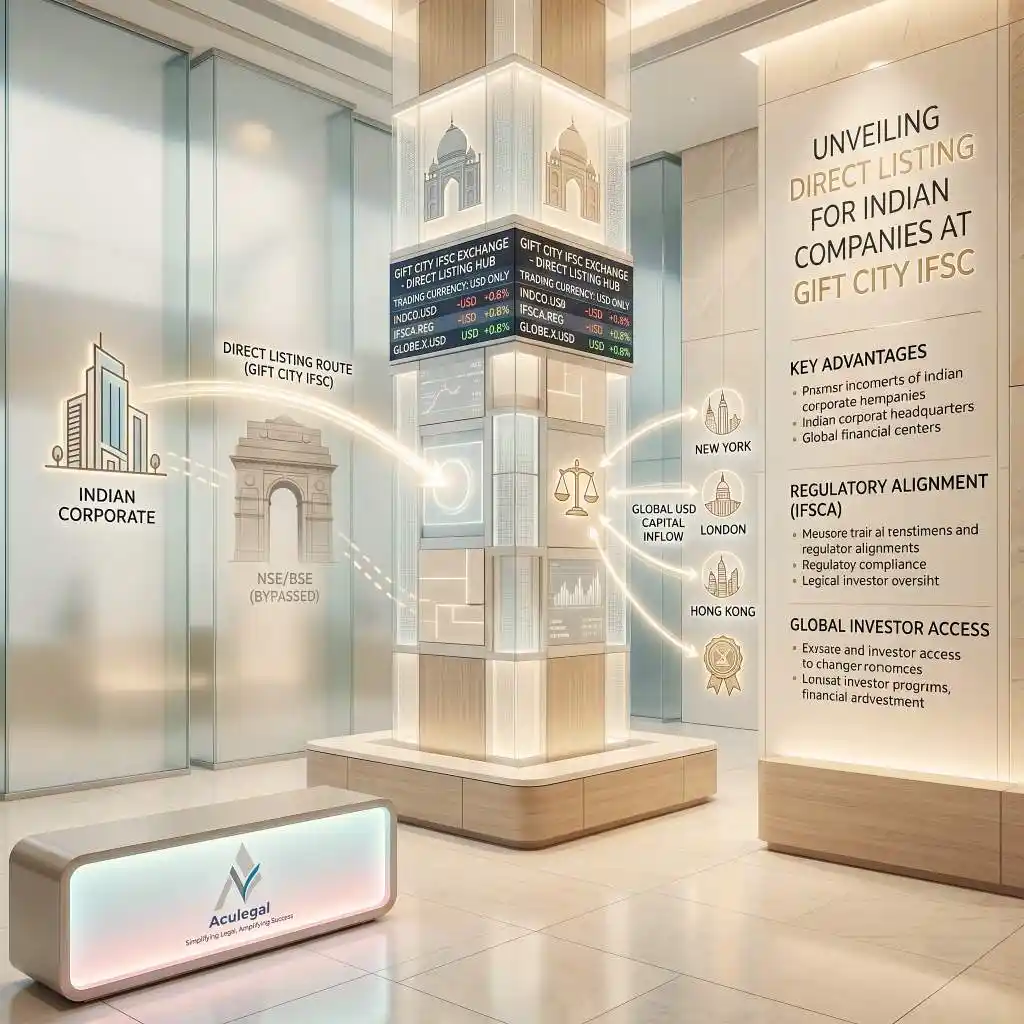
Here’s the piece that most Indian founders don’t know about: Indian public companies can now list their shares directly on GIFT IFSC exchanges, without first listing on NSE or BSE.
This Direct Listing Scheme, backed by FEMA rules and the Companies Act, is one of the most consequential regulatory developments for Indian startups and growth-stage companies in recent years. It allows companies to:
- Raise capital in foreign currency (USD-denominated transactions)
- Access a global investor base, NRIs, FPIs, and international institutional investors
- Operate within a single unified regulatory framework under IFSCA
- Benefit from significant tax advantages, no STT, no CTT, no stamp duty on IFSC exchange trades, and concessional tax rates on interest and dividend income
The eligibility bar? The issuer must have commenced business at least three years prior to filing the prospectus, and foreign holdings must remain within the limits prescribed under Schedule I of the FEMA (Non-Debt Instruments) Rules, 2019.
For unlisted companies, the issue price for initial listing must be determined through a book-building process and cannot be less than the fair market value.
Link to Aculegal’s “Legal Insights” advisory service page here.
Why GIFT City Is No Longer Just “Promising”, It’s Operational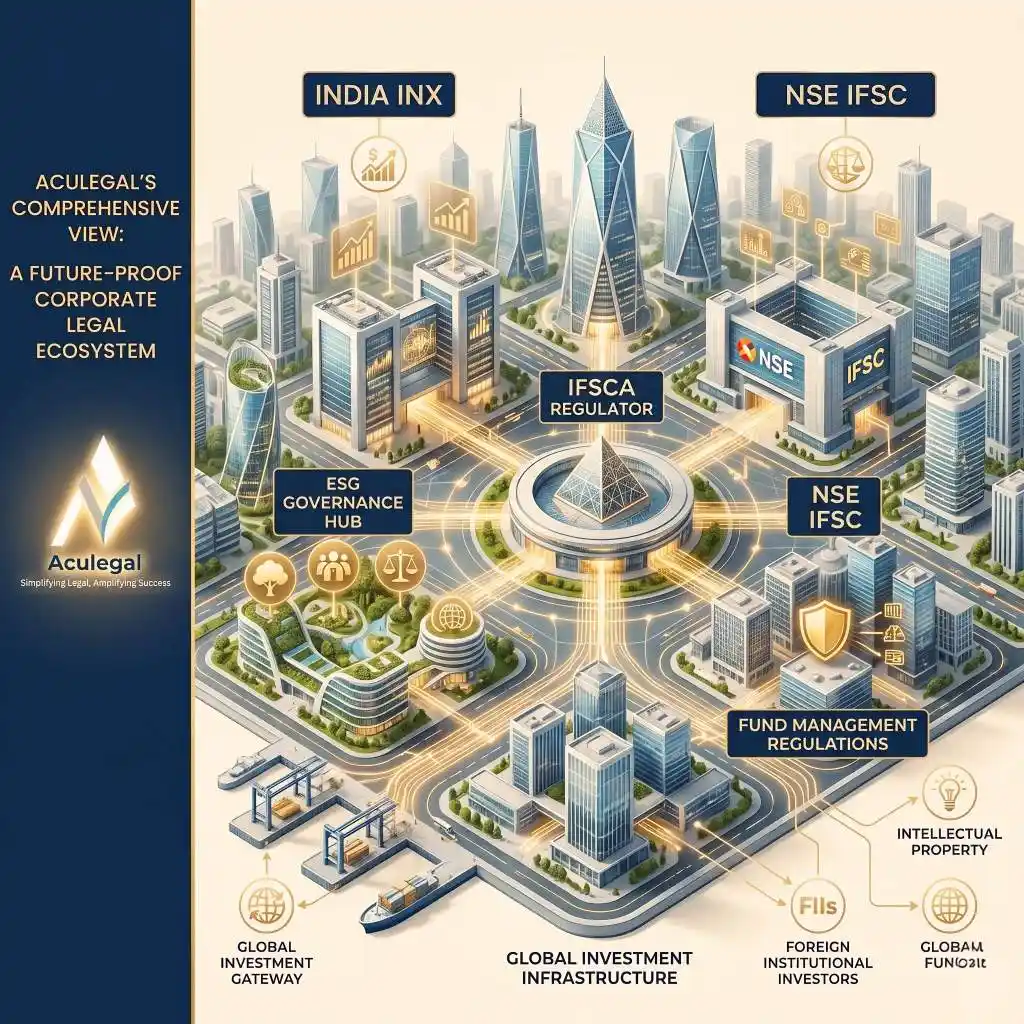
Skeptics have been saying GIFT City is “the future” for a decade. That narrative is outdated. The ecosystem is now operational, deep, and increasingly comparable to established international financial centres.
Here’s what’s in place today:
- Single unified regulator (IFSCA) with powers spanning RBI, SEBI, IRDAI, and PFRDA – no multi-regulator complexity for IFSC-based operations
- Two active stock exchanges: India INX (India International Exchange) and NSE IFSC – with USD-based trading and extended market hours
- Capital Market Intermediaries Regulations, 2025 – a consolidated, globally aligned framework governing brokers, investment bankers, custodians, credit rating agencies, and more
- ESG-ready governance infrastructure – IFSCA has introduced ESG oversight requirements aligned with global benchmarks
- Fund Management Regulations, 2025 – updated frameworks for private equity, venture capital, and alternative funds operating out of IFSC
The IFSCA has also introduced the concept of “accredited investors”, high-net-worth individuals and institutions that qualify for faster, simplified investment pathways. This makes GIFT IFSC increasingly attractive for structured capital raises targeting sophisticated global money.
What This Means for Founders, Startups, and SMEs
If you’re building a company with global ambitions, or if you’re already operational and looking to raise your next round from international investors, the GIFT IFSC ecosystem deserves serious attention. Here’s why:
The cost arbitrage is real. Setting up an offshore holding structure in Singapore or Mauritius involves high cost, ongoing compliance overhead, and complex cross-border tax structuring. For many companies, GIFT IFSC now offers a comparable outcome at a fraction of the cost and complexity, within India’s regulatory perimeter.
The tax environment is genuinely competitive. Capital gains on specified securities are tax-free for NRIs and FPIs in GIFT IFSC. No STT, no CTT, no stamp duty. This is not a future aspiration, it’s the current law.
The regulatory momentum is accelerating. IFSCA has gone from a startup regulator to a globally respected authority in under five years. The pace of framework development in 2025–2026 signals that the Indian government is genuinely committed to making GIFT City compete with Dubai and Singapore, not just on paper, but in practice.
The window for early movers is right now. The number of registered entities, listed companies, and active capital market intermediaries at GIFT IFSC is still relatively small. The companies and founders who establish their presence, structure, and compliance frameworks now will have a structural advantage over those who wait.
The Compliance Reality: What You Need to Get Right
None of this is frictionless. The new capital-raising frameworks come with meaningful compliance requirements, and getting them wrong is expensive.
Here’s what you need to have in order before you attempt to raise foreign capital through IFSC mechanisms:
- Entity structure: Is your entity properly constituted and registered under IFSCA? IFSC entities are treated as foreign entities under FEMA. This has significant implications for your capital structure and investment permissions.
- Listing eligibility: Do you meet the three-year business commencement threshold? Are your financials audited and compliant with applicable disclosure standards?
- Investment banker registration: QIPs require registered investment bankers under IFSCA’s Capital Market Intermediaries Regulations, 2025, not just any domestic merchant banker.
- FEMA compliance: Foreign investment limits under Schedule I of the FEMA (NDI) Rules must be respected. There are no exemptions for exceeding these limits, regardless of where the capital comes from.
- Disclosure obligations: Post-listing continuous disclosure requirements under the IFSCA (Listing) Regulations, 2024 are detailed and ongoing. Non-compliance can result in delisting or regulatory action.
This is precisely where legal counsel that combines capital markets expertise with deep IFSCA regulatory knowledge becomes the difference between a successful raise and a compliance nightmare.
Simplifying Legal. Amplifying Success.
At Aculegal, we work with founders, startups, and growth-stage companies navigating the complexity of India’s evolving regulatory landscape. GIFT City and IFSC-based structures are a core part of what we do — from initial entity setup and IFSCA registration to ongoing compliance, capital markets advisory, and cross-border transaction structuring.
We don’t give you generic advice wrapped in complicated language. We give you a clear, commercially oriented roadmap, because legal clarity is not just about staying compliant, it’s about moving faster and smarter than your competition.
Our IFSC and GIFT City advisory covers:
- Entity incorporation and IFSCA registration
- Capital markets compliance (IPO, direct listing, QIP, preferential issue, rights issue)
- FEMA structuring for inbound and outbound foreign investment
- Ongoing regulatory compliance and filings
- Cross-border M&A and investment transaction support

Conclusion: The Rules Have Changed. Have You?
The new IFSC share capital rules for foreign capital raising at GIFT City are not a distant regulatory development to bookmark and revisit later. They are live, operational, and being used by companies right now to raise international capital faster, more cheaply, and within India’s regulatory perimeter.
Here’s what to take away:
- The Preferential Issue, QIP, and Rights Issue frameworks are now fully operational at GIFT IFSC
- Indian public companies can directly list at GIFT City, no domestic listing required
- The tax advantages are significant and real, no STT, no CTT, no stamp duty for IFSC trades
- The compliance requirements are non-trivial and require specialist legal and regulatory counsel
- The opportunity window for early movers is open right now
Your next step is simple. If you’re a founder or business leader exploring GIFT City as a capital-raising jurisdiction or if you’re trying to understand how the new IFSC rules apply to your existing structure, book a free consultation with Aculegal today.
We’ll give you a straightforward assessment of your options, your compliance obligations, and the fastest compliant path to your capital-raising objectives.
Simplifying Legal. Amplifying Success.